19:04
19:04 20:11
20:11 SUKKOT, primo giorno - Lev. 22-26/23-44, Num. 29-12/29-16


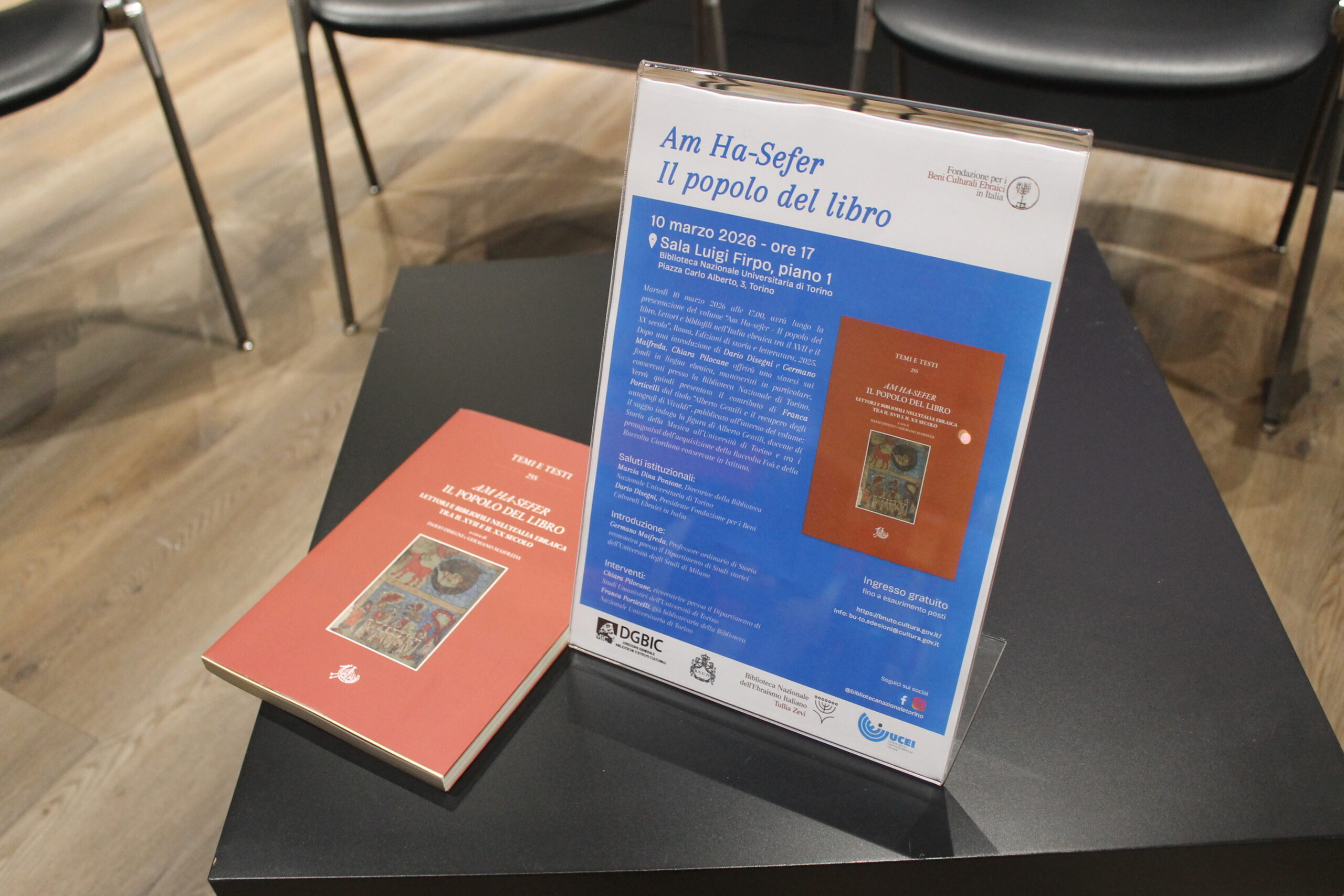
The presentation of the volume “Am ha-sefer. The People of the Book,” dedicated to the love of books in the Jewish tradition: what better occasion to inaugurate the brand-new space dedicated by the National University Library of Turin to talks and events related to the exhibitions?
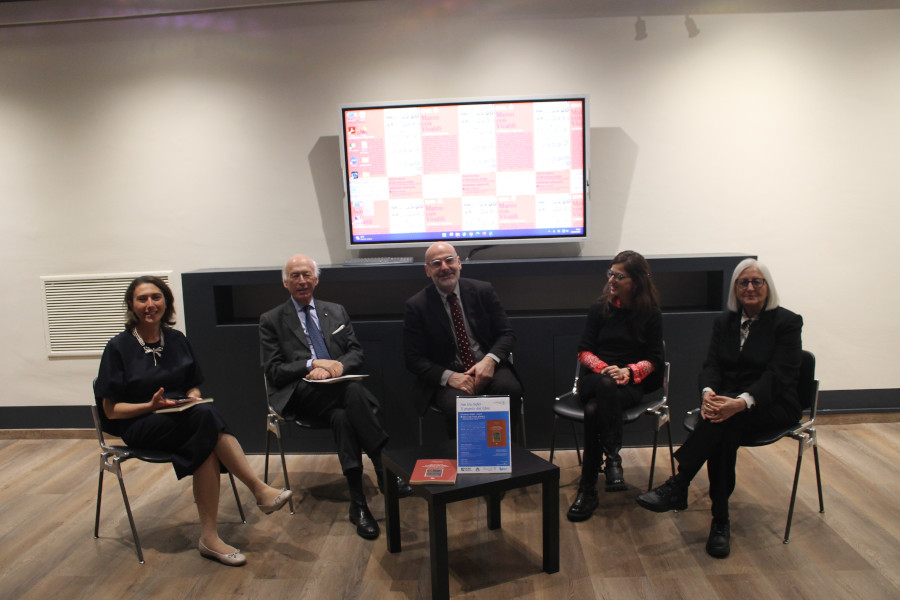
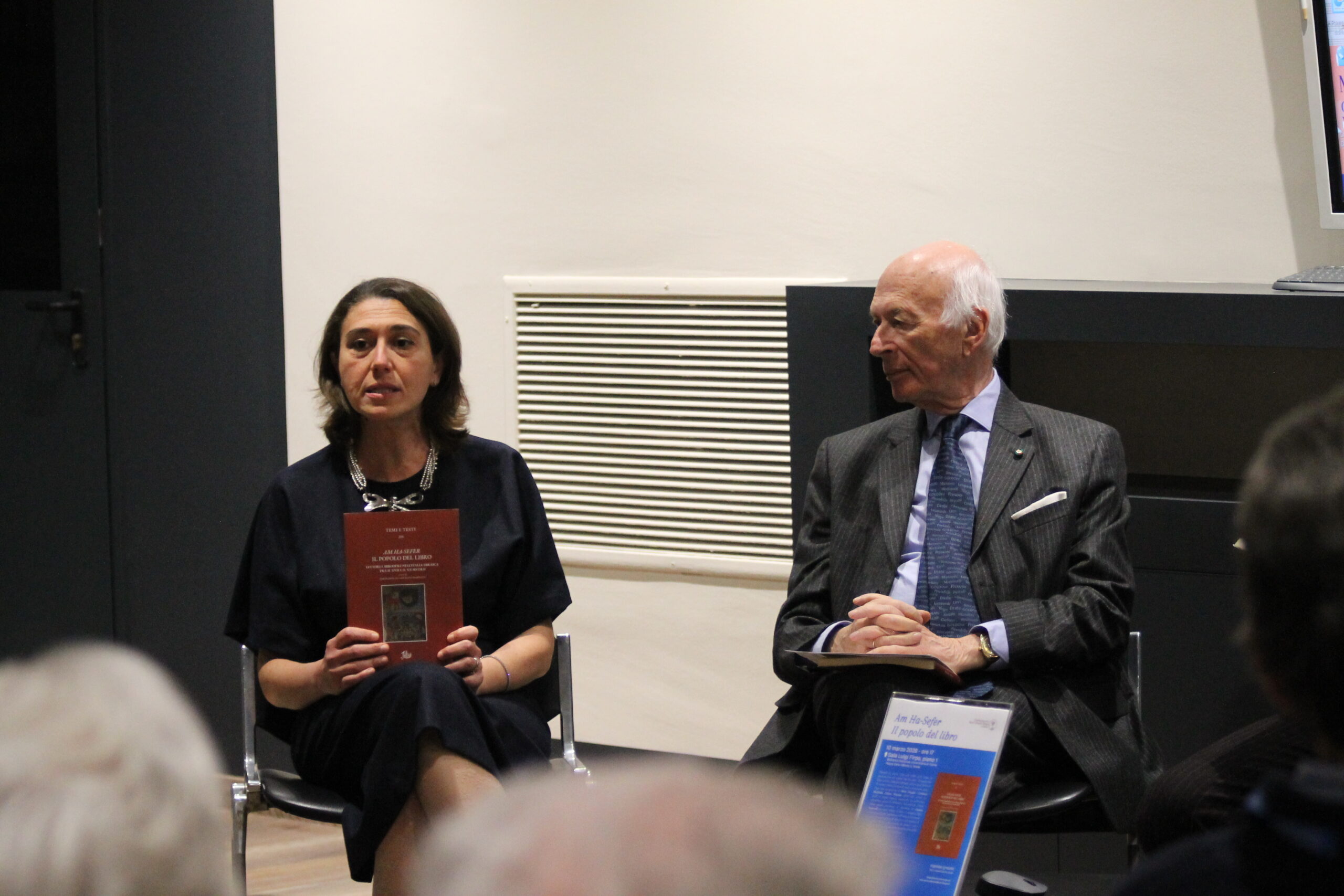
The meeting took place on the afternoon of March 10, just a few meters from the exhibition that recounts the events that led the Library to acquire its extraordinary Vivaldi collection. The program included presentations by the volume’s editors, Dario Disegni and Germano Maifreda, who explained the publication’s genesis, objectives, and content; by the director, Marzia Dina Pontone; by Franca Porticelli, former director of the Library’s Manuscripts and Rare Books Room; and by the author, representing the University.
As the editors note, the volume collects the proceedings of a conference held at the Tullia Zevi Library in Rome in November 2023, and offers a range of testimonies from various eras and perspectives, shedding new light on a vast and important topic, which in recent years has been receiving renewed attention in its many facets, but which still has much to explore. It recounts stories of Jewish and Christian collecting (Christian collectors of Jewish books, by Pier Francesco Fumagalli; The “Jewish bookshop” of the Lattes brothers, by Marzia Pontone), the creation of thematic libraries (The Morpurgo Collection: Library of literature and history of the Semitic peoples by Carla Lestani; The [musical] library of Ugo and Olga Levi in Venice, by Giorgio Busetto; The stigma of the Dante library by Sidney Sonnino, by Rossano De Laurentiis), the stories of publishers such as Leo Olschki (by Margherita Palumbo) and Jewish patronage (Alberto Gentili and the recovery of Vivaldi’s autographs, by Franca Porticelli).
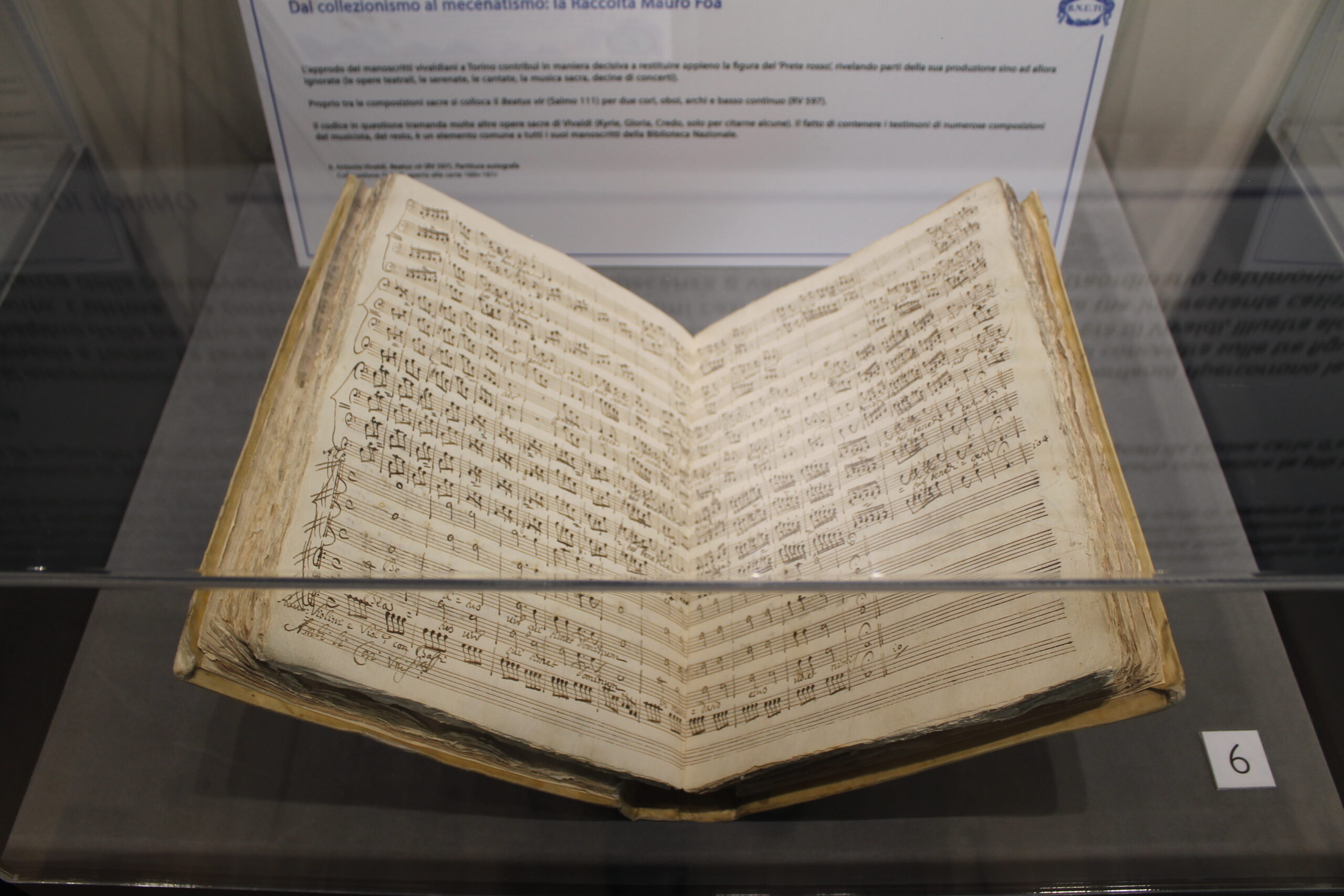
The latter theme was the focus of the presentation, and Franca Porticelli detailed the history of the acquisition of the “Red Priest’s” autographs, one of the National Library’s most important collections, recently highlighted as part of the Institute’s many Vivaldi March initiatives. Sold by his heirs after Vivaldi’s death in Vienna, when he was in dire poverty, the manuscripts passed from hand to hand until they were separated into two separate collections. These came to the Library at different times, but both were made possible thanks to the guidance of Alberto Gentili, composer and professor of History of Music at the University of Turin between 1925 and 1938, who helped the curators evaluate the papers and finalize their purchase. The first acquisition was made possible thanks to the generosity of Turin stockbroker Roberto Foà, who personally purchased it to sell it to the State, and through it to the Library, in May 1927. He also requested that it be named after his prematurely deceased son, Mauro. In the case of the second acquisition, to which Foà would again generously contribute, the State showed it did not appreciate the purchase being made by a Jew, and especially a well-known anti-fascist: thus, the new patron, Filippo Giordano, came into play. Gentili had also been commissioned, in 1932, to catalog and publish Vivaldi’s precious manuscripts, but the advent of racist laws prevented him from completing the work. Since 2019, his merits have been commemorated on a plaque installed by the Municipality and the University of Turin. The guest speaker, Library Director Marzia Pontone, also took the opportunity to share with the audience her research on the Lattes brothers’ library, donated in 1887 to the Braidense Library, of which Pontone served as scientific director between 2022 and 2023.
Finally, there was a special opportunity to discuss the Library’s extraordinary heritage of Hebrew books, both manuscript and printed: a vast collection, created by the dukes and later kings of Savoy, and which—despite the irreparable losses suffered by the manuscript collection in the 1904 fire—remains one of the greatest in Italy and the world. This heritage is particularly dear to me, and still partly awaits study, both with regard to the manuscripts’ contents and their textual history, and also for the importance of these volumes in documenting the circulation of books and knowledge in Jewish circles.
By Chiara Pilocane