18:38
18:38 19:45
19:45 Bereshit - Gen. 1-1/6-8


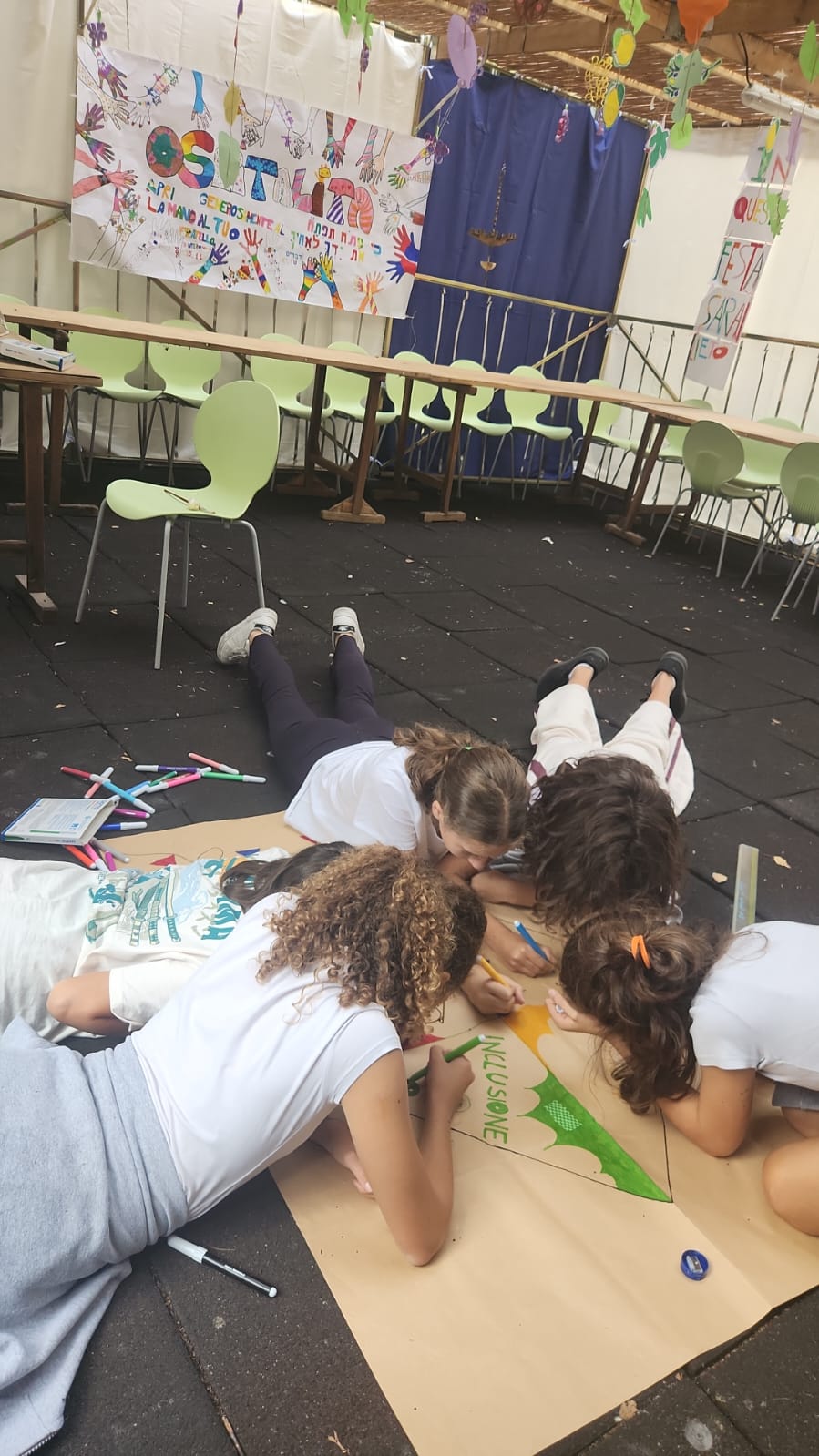
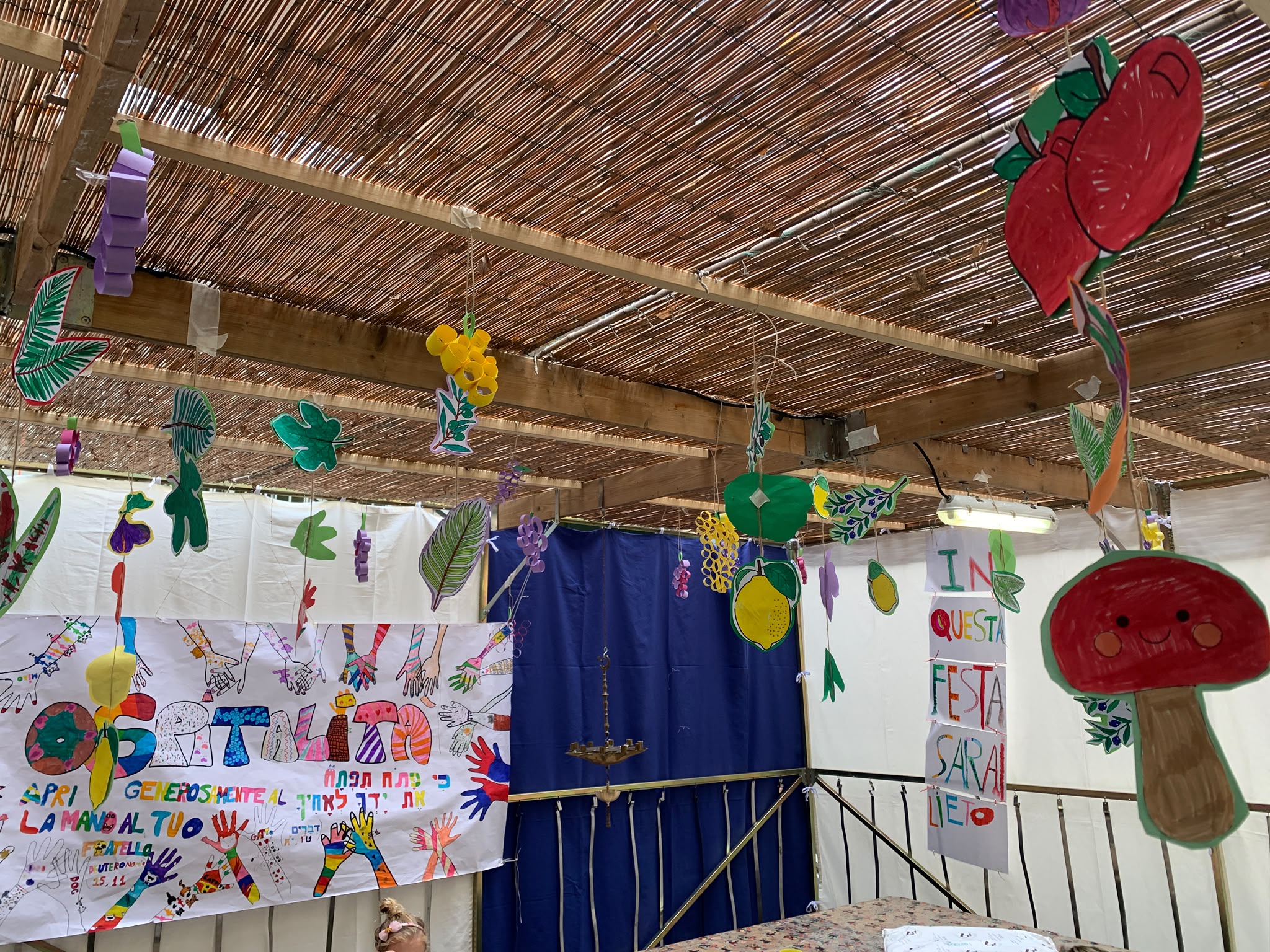
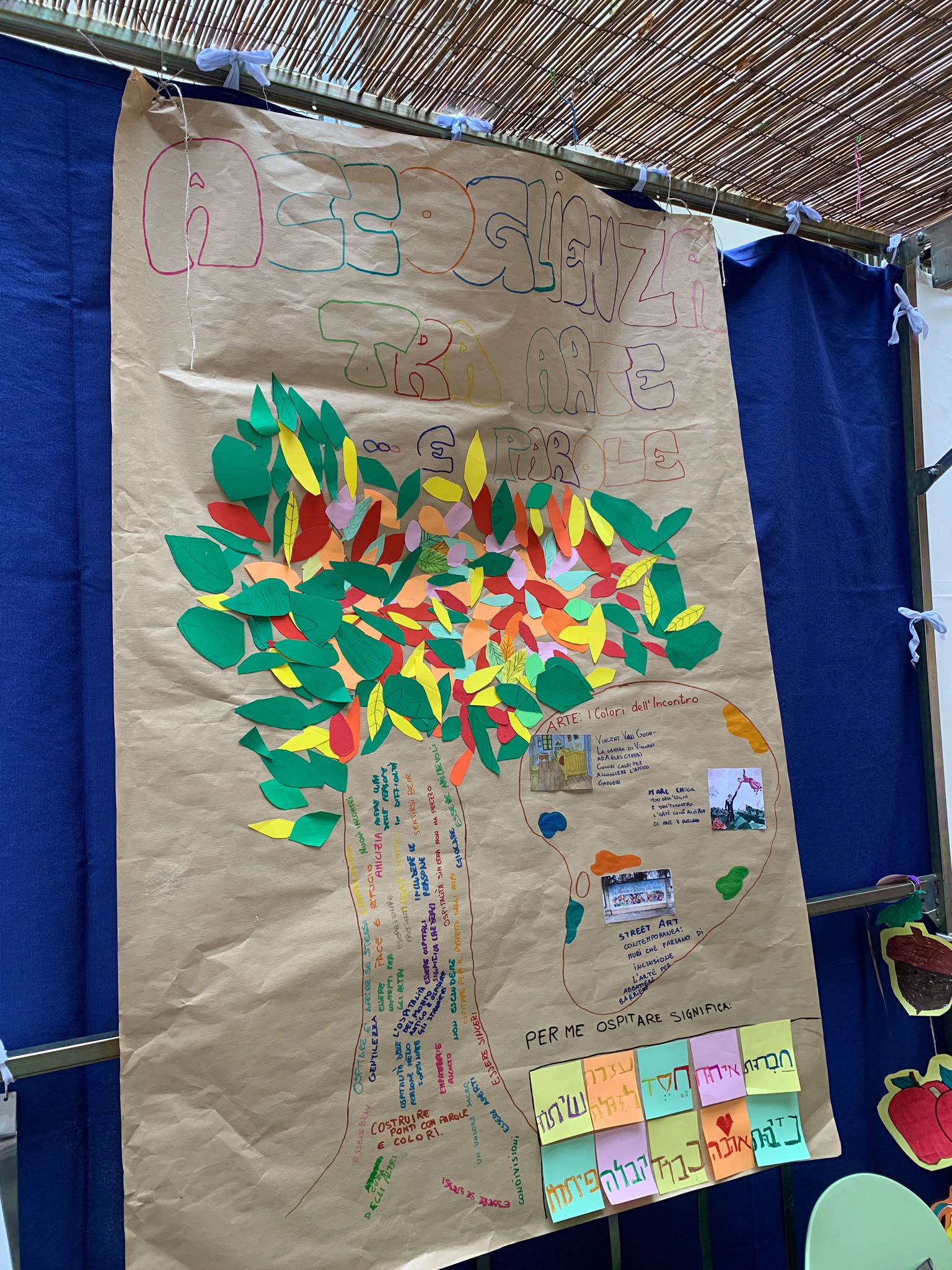
Anyone who has visited—or will visit during the final days of the festival—the community Sukkah will immediately notice that one of the themes addressed this year by our school’s teachers is hospitality, in its broadest sense. Hospitality is actively practiced every year as children fill the community-built Sukkah to decorate it, have snacks, sing, and study using special holiday booklets created by teacher Barbara Napolitano; through these, they learn about diverse aspects of the festival across a wide range of subjects.
Secondary school teachers integrated this chosen theme into their curricula, giving us the opportunity to explore hospitality through modules that went beyond standard lessons on Judaism—such as those covering the hospitality shown in the tent of Abraham and Sarah, the Ushpizin (spiritual presences of biblical figures who, according to Jewish mysticism, visit the Sukkah), and the duties and limitations that Halakhah (Jewish law) imposes even on the guest. We studied hospitality in the natural world, looking at animal “guests” that live alongside or upon other creatures, and examined the life of the wandering mathematician Paul Erdös, who was hosted by many colleagues who influenced his research. We analyzed Moritz Daniel Oppenheim’s famous 1867 painting Das Laubhüttenfest (The Feast of Tabernacles), which documents Jewish life in Germany as it sought to balance fidelity to Jewish tradition with integration into the surrounding society. We also explored examples of hospitality and the acceptance of “the other”—with varying outcomes—in Italian literature, ranging from Giovanni Verga’s short story Rosso Malpelo to Fabio Geda’s novel Nel mare ci sono i coccodrilli (In the Sea There Are Crocodiles). In music class, the students analyzed the song Ha’Oreach (The Guest) by Naomi Shemer; it offers a very sincere look at the reception of Russian immigrants in Israel during the 1980s—a time when the process was far from easy. Finally, accompanied by Professor Baruch Lampronti, the students visited the Terracini Archive to view various historical models of the Sukkah.
Ruth Mussi