18:25
18:25 19:33
19:33 Noach - Gen. 6-9/11-32


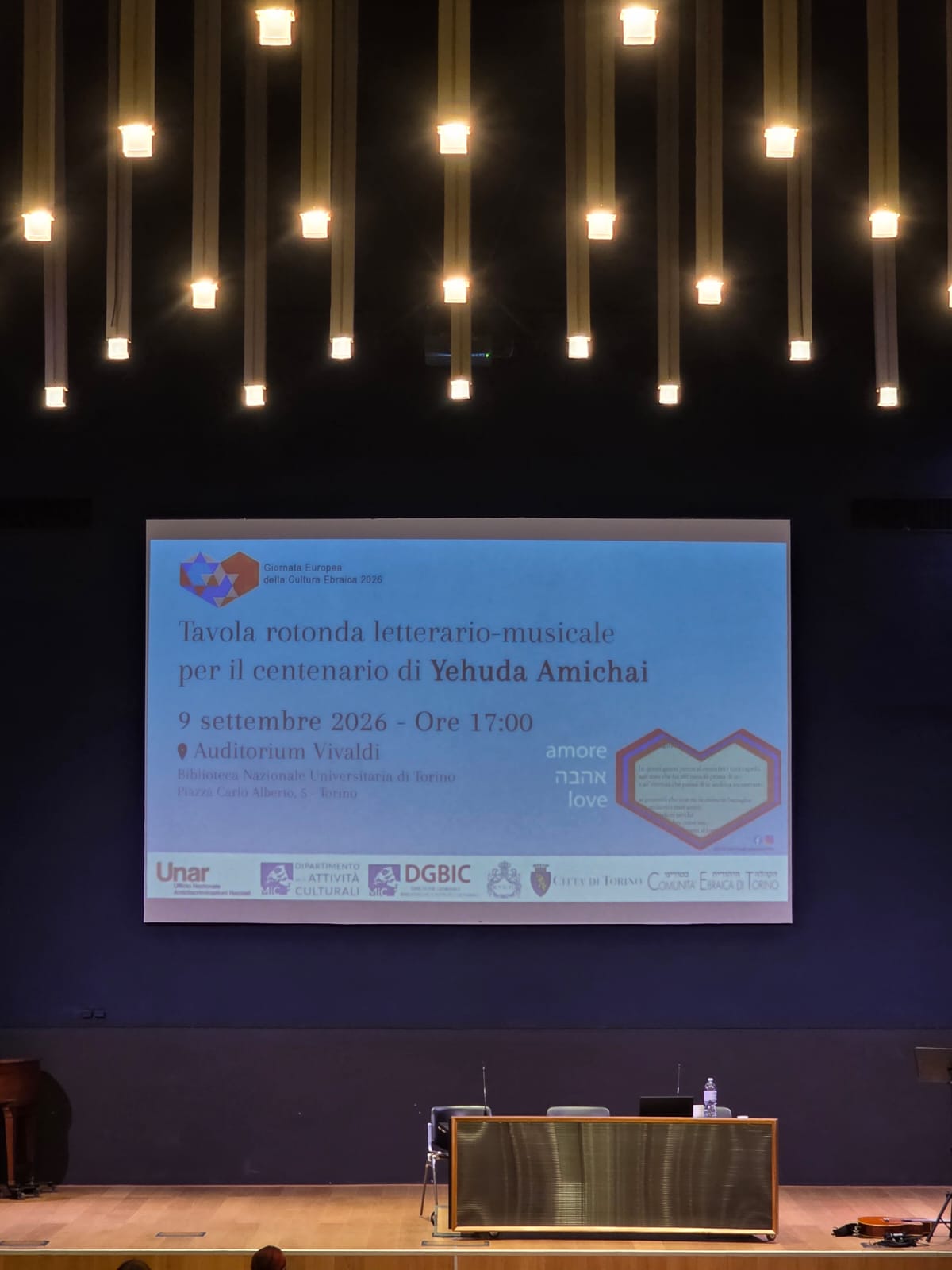
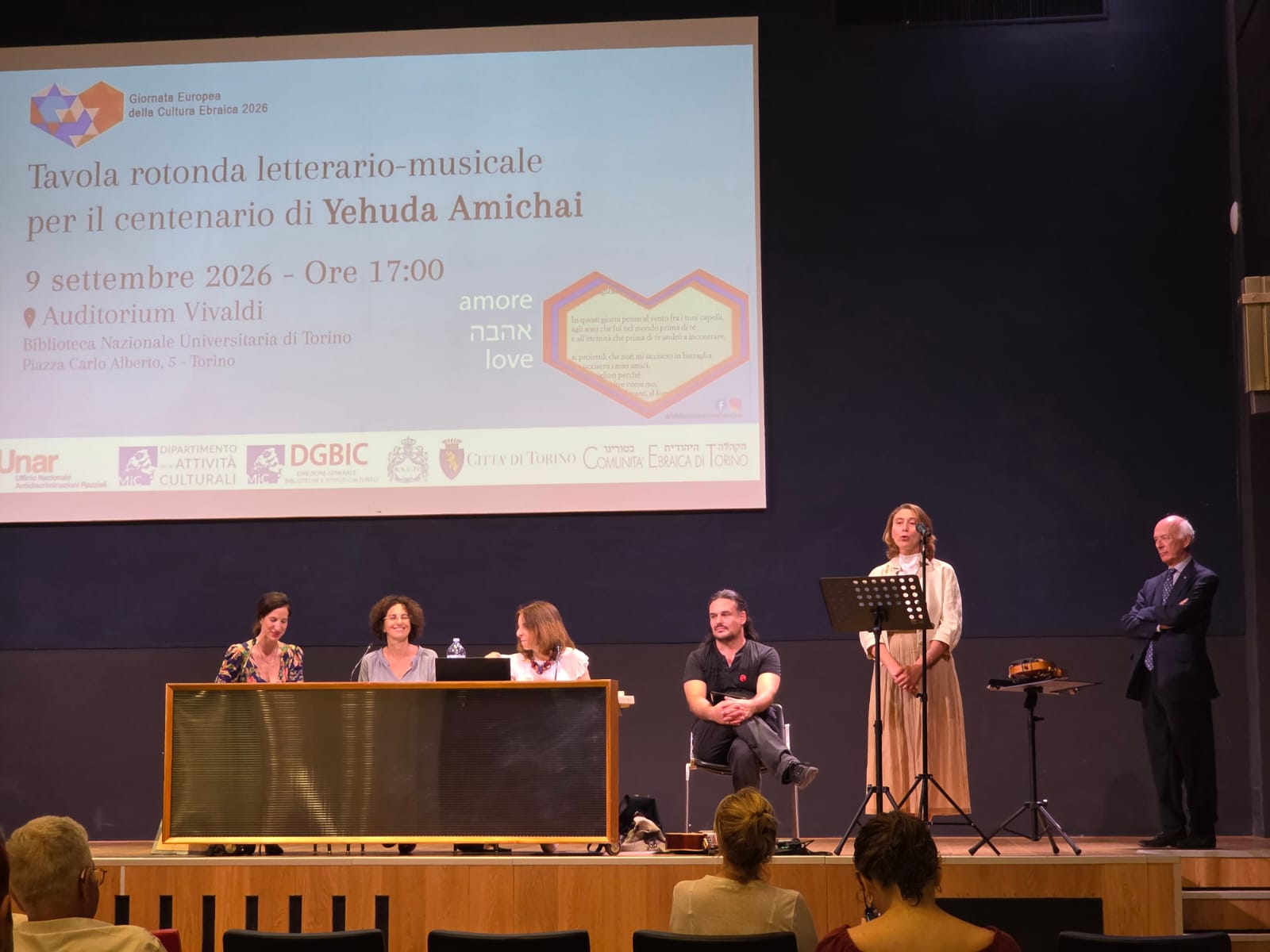
To cap off what has become “Jewish Culture Week,” the Vivaldi Auditorium at the National University Library hosted an engaging afternoon on Wednesday, September 9, dedicated to Yehuda Amichai. A great Israeli poet, his work explores love—the theme of this year’s Jewish Culture Week—as well as war, torment, and a complex relationship with the divine and the religious realm. Born Ludwig Pfeuffer in Würzburg, Germany, in 1924, and having emigrated to Israel with his family in 1936, Amichai passed away in 2000. Yet, his themes, his often critical and provocative stance, and the powerful questions he posed to society (both Israeli and beyond) keep his work extraordinarily relevant—especially during the turbulent period the country has been experiencing since October 7.
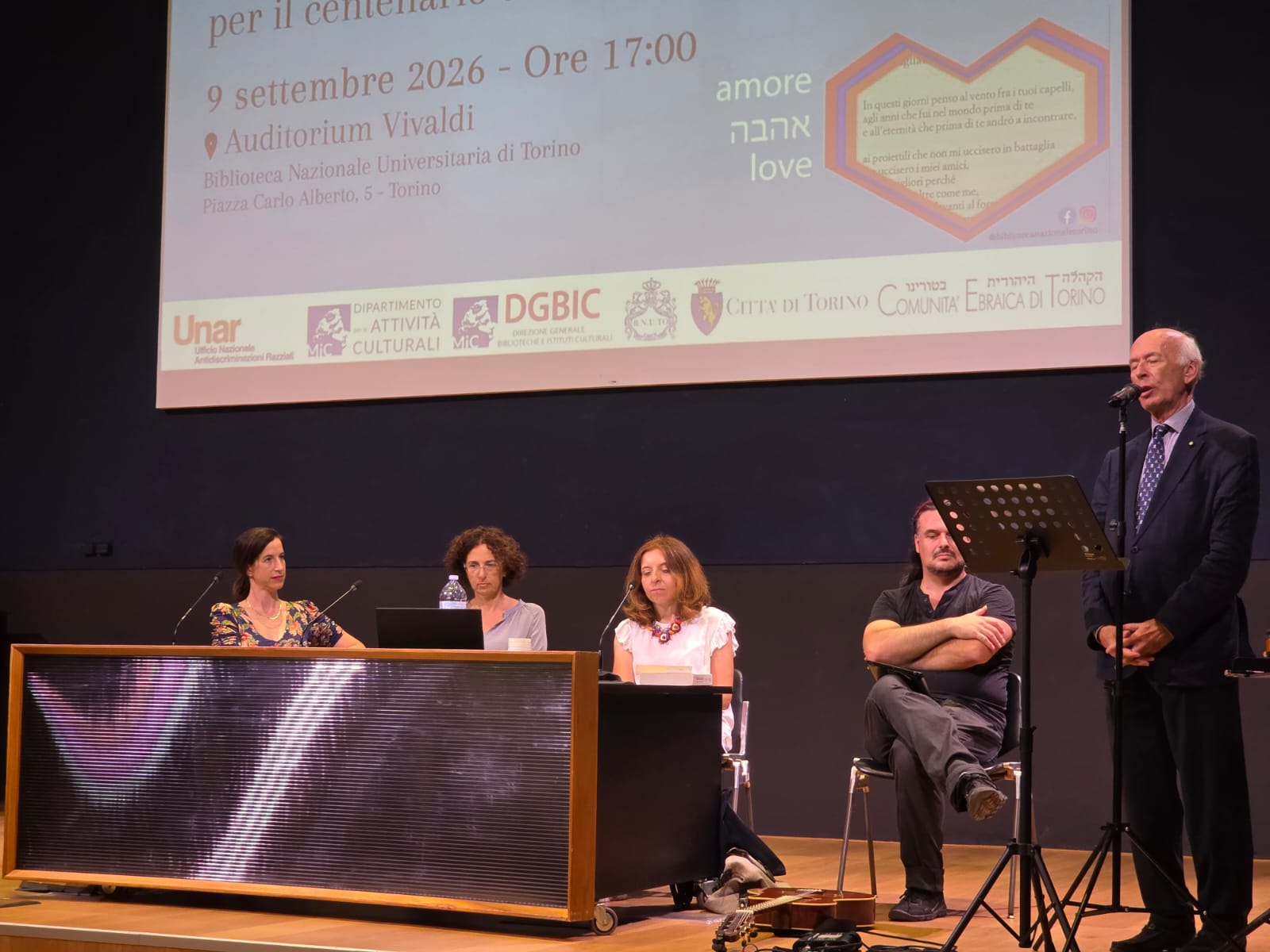
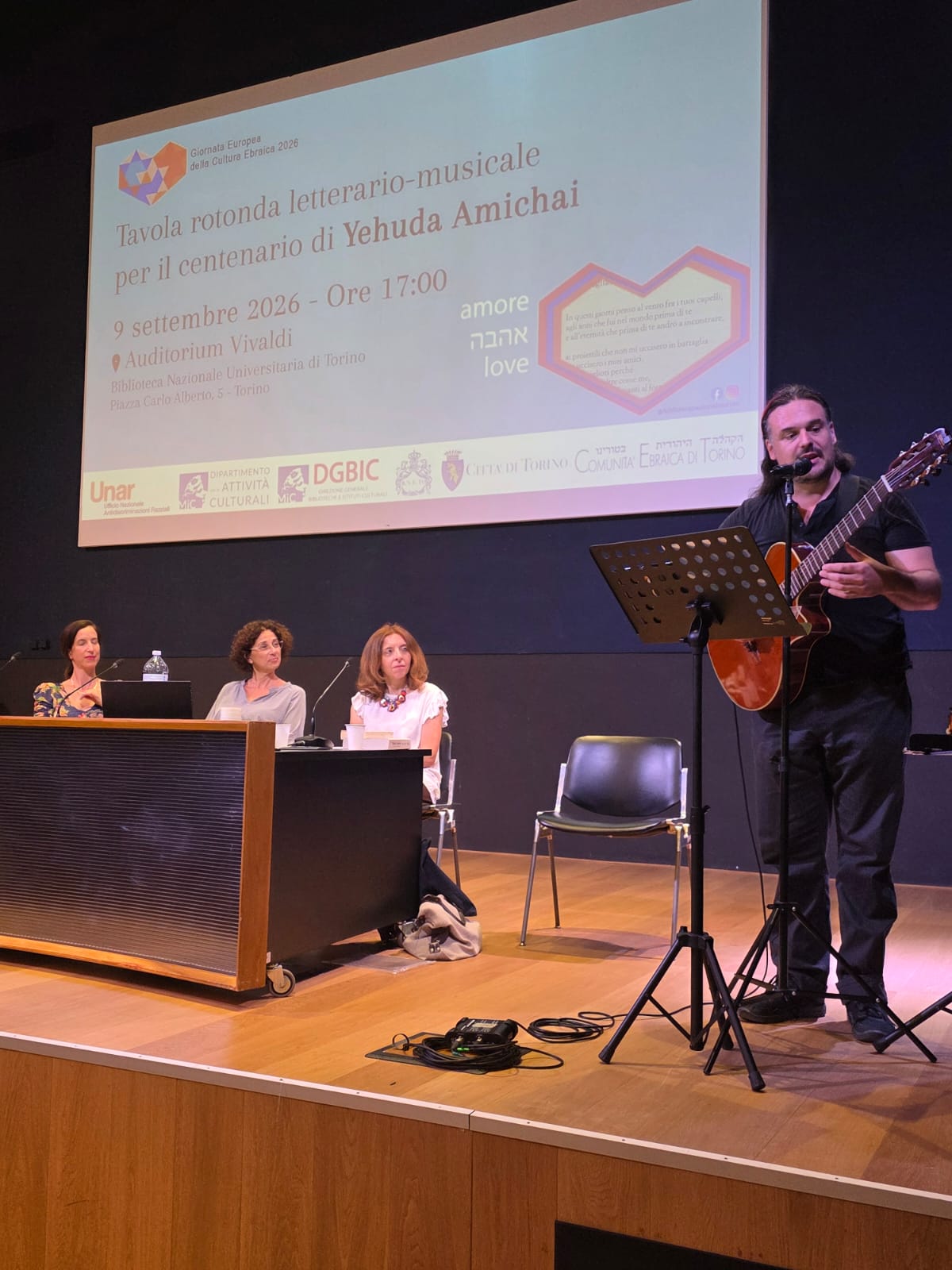
Three distinguished speakers—poet and writer Sarai Shavit, along with critics and scholars of Israeli literature Raffaella Scardi (also a translator) and Sara Ferrari (based in Turin and Milan, respectively)—illuminated his personality, his world, and his verses. The fascinating portrait of the author was rounded out by a musical performance from singer-songwriter Rocco Rosignoli, who set some of the poet’s texts to music with great empathy.
What emerged from this attempt to engage intellectually with Amichai’s multifaceted language?
Three fundamental themes stood out in his work. Love, certainly—expressed in all its dimensions (spiritual, idealistic, and erotic/sensual) and a source of both conflict and inner turmoil, yet ultimately inalienable and dominant; a love often captured through skillful references to the very heart of biblical texts. His relationship with God—always contentious yet inescapable for someone like Amichai, who received a religious upbringing he chose to leave behind but whose foundations he never repudiated—was a bond defined by both need and rupture: continuous, fraught with conflict, and never banal. Then there is war, which the poet experienced for many years as an IDF soldier—a dimension that, alongside the harshness and pain of death, also brought deep friendship, closeness in moments of extremity, and the tangible reality of essential defense.
Ultimately, what remains is the powerful image of a poet who sang of a reality that was solid and alive—never banal or contrived. Even his Jerusalem—the chosen city where he lived for many years and a central pillar of his poetic vision—is not a picture-postcard cliché, but a place of lived experience, a crossroads of lives.
In short, a powerful poet—Israeli to the core in his critical spirit and his love for his land.
David Sorani