19:04
19:04 20:11
20:11 SUKKOT, primo giorno - Lev. 22-26/23-44, Num. 29-12/29-16


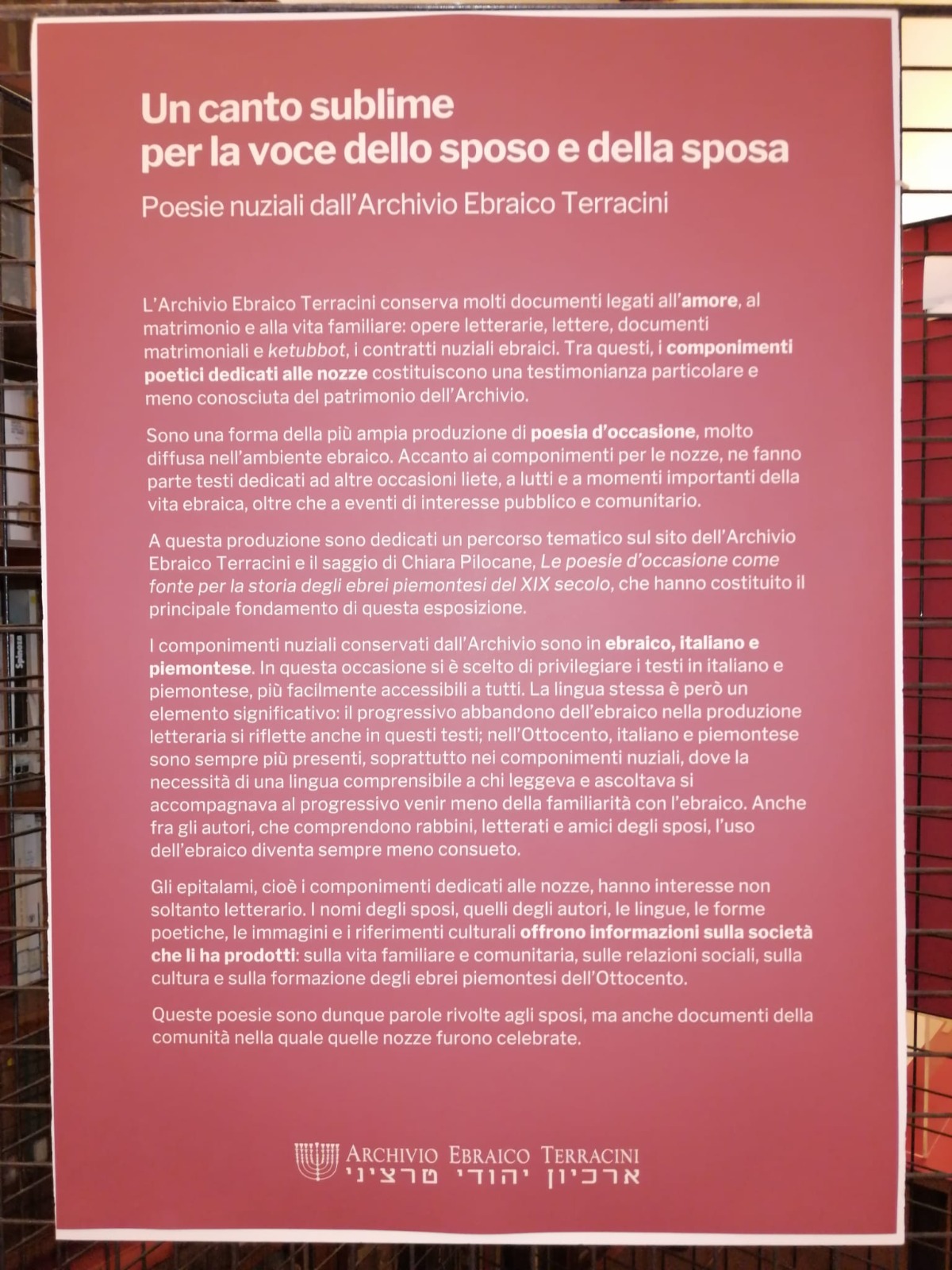
Wedding Poems from the Terracini Jewish Archive
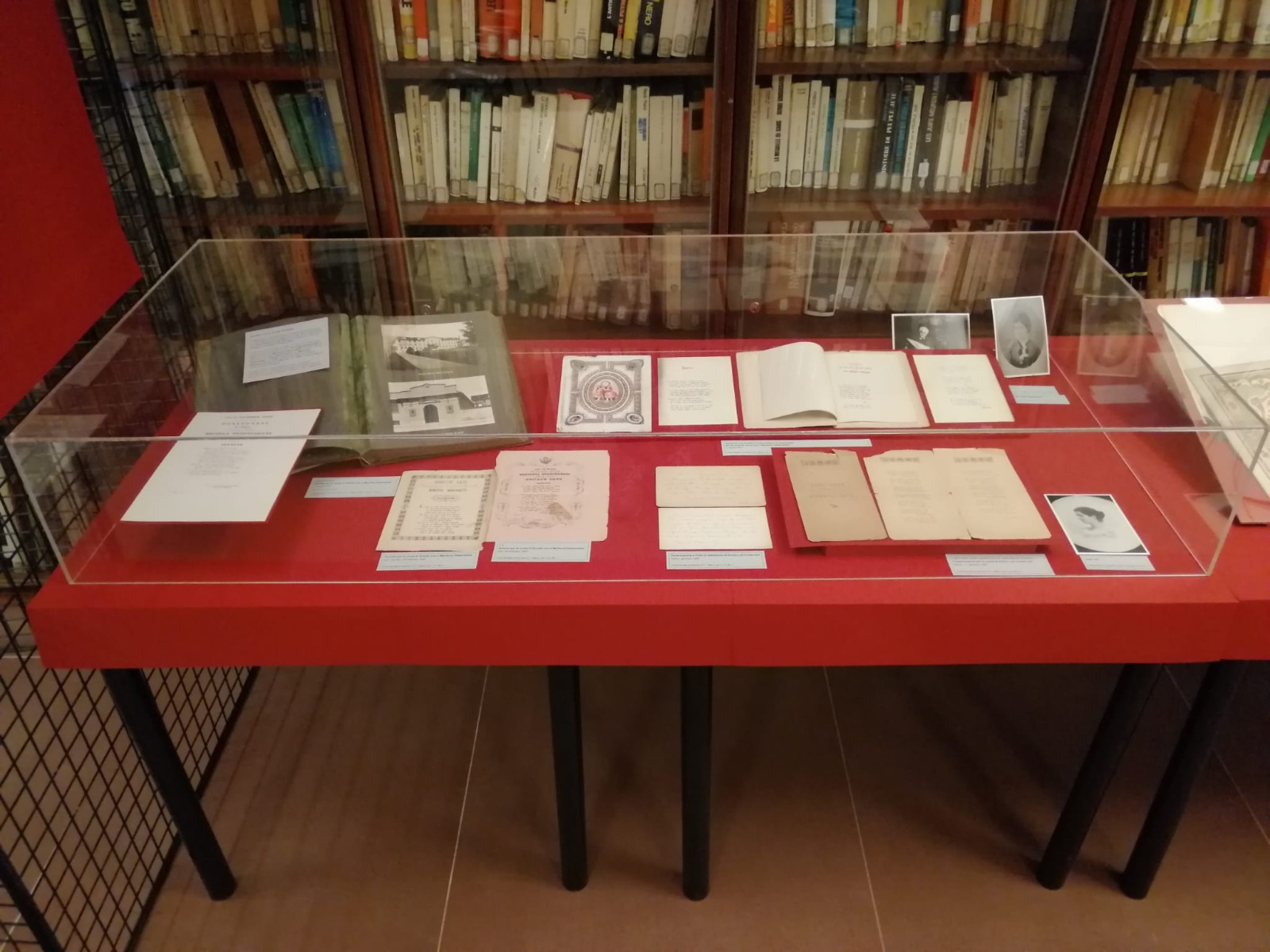
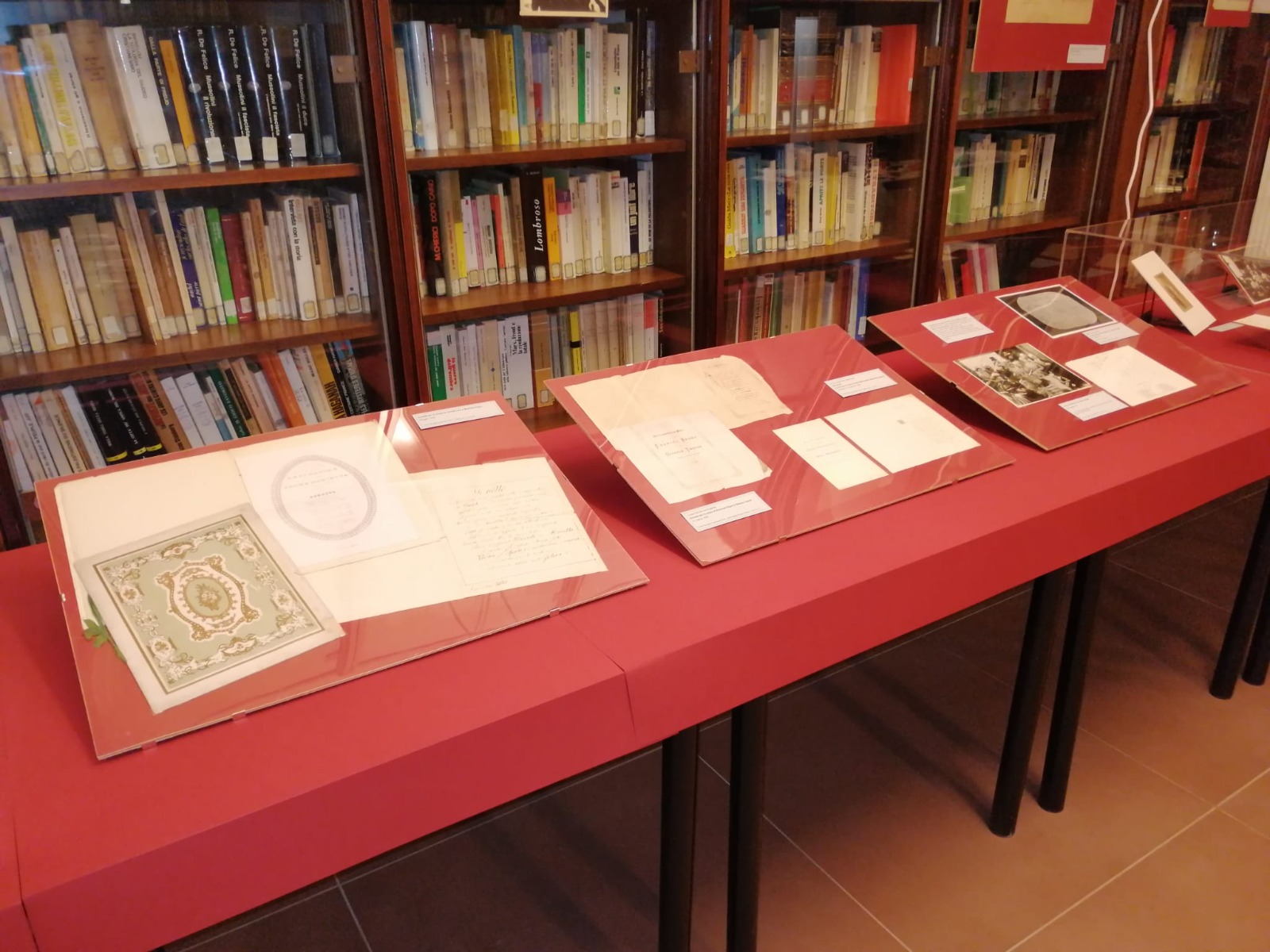
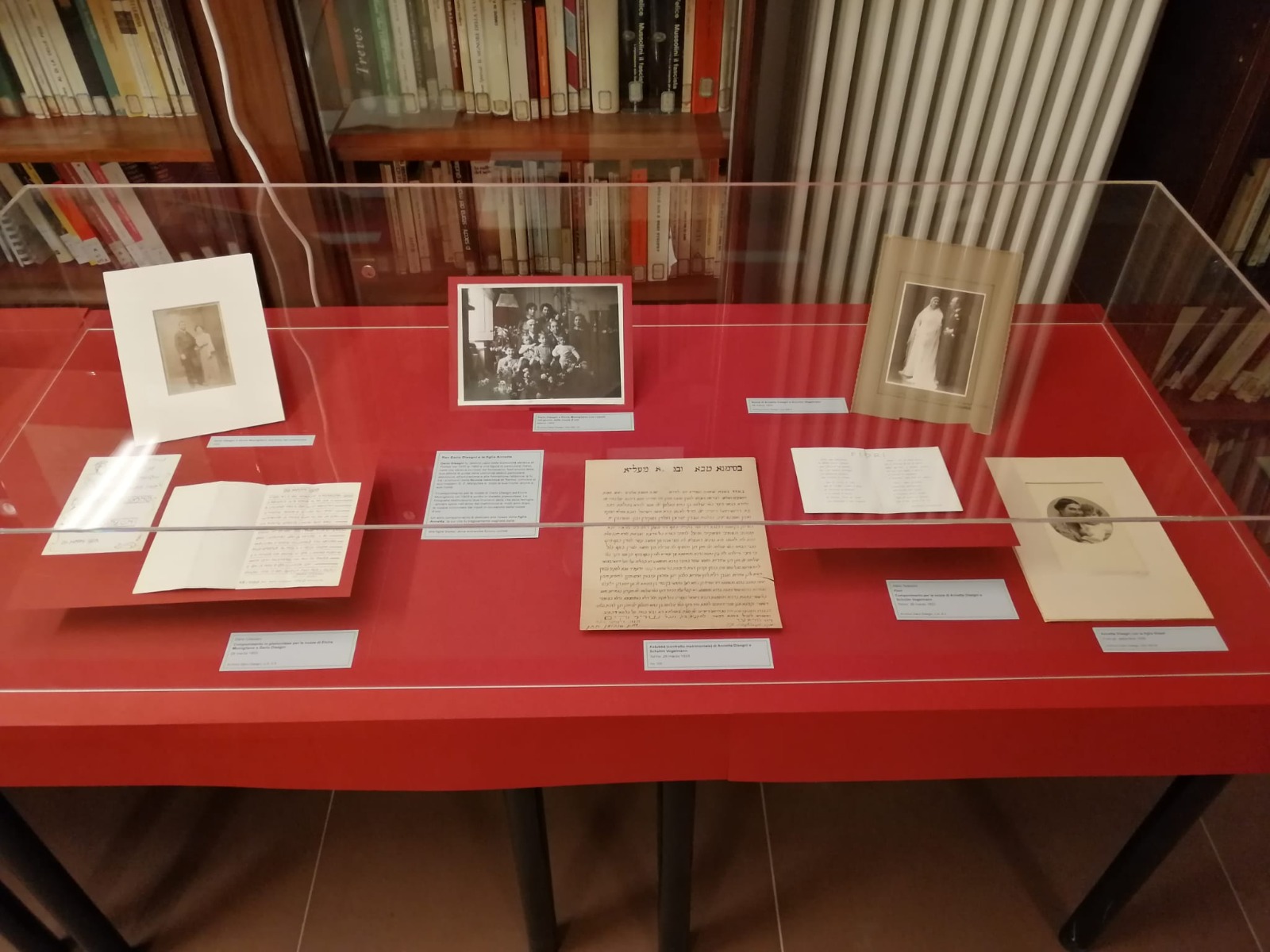
The Terracini Jewish Archive preserves many documents related to thelove, marriage and family life: literary works, letters, marriage documents and ketubbot, Jewish wedding contracts. Among these, the poetic compositions dedicated to weddings constitute a particular and lesser-known testimony to the Archive’s heritage.
They are a form of the wider production of occasional poetry, very widespread in the Jewish environment. Alongside wedding compositions, it includes texts dedicated to other happy occasions, bereavements and important moments in Jewish life, as well as events of public and community interest.
A thematic itinerary on the Terracini Jewish Archive website and Chiara Pilocane’s essay, Occasion poems as a source for the history of the Piedmontese Jews of the 19th century, are dedicated to this production, which constituted the main foundation of this exhibition.
The wedding compositions preserved by the Archive are in Hebrew, Italian and Piedmontese. On this occasion we chose to favor texts in Italian and Piedmontese, which are more easily accessible to all. However, the language itself is a significant element: the progressive abandonment of Hebrew in literary production is also reflected in these texts; in the nineteenth century, Italian and Piedmontese were increasingly present, especially in wedding compositions, where the need for a language understandable to those reading and listening was accompanied by the progressive loss of familiarity with Hebrew. Even among the authors, who include rabbis, writers and friends of the spouses, the use of Hebrew becomes less and less common.
The epithalami, that is, the compositions dedicated to weddings, are not only of literary interest. The names of the spouses, those of the authors, the languages, the poetic forms, the images and the cultural references offer information on the society that produced them: on family and community life, on social relations, on the culture and education of nineteenth-century Piedmontese Jews.
These poems are therefore words addressed to the spouses, but also documents of the community in which that wedding was celebrated.
To delve deeper into the theme of occasional poems in the Terracini Jewish Archive: https://www.archivioterracini.it/divulgazione/percorsi-tematici/poesie-dacca/
The exhibition title quotes, with a slight adaptation, a line from the refrain of *Qecḥì kinnor*, a wedding ode by Samuel Archivolti (1530–1611), an Italian Jewish poet and scholar.
Baruch Lampronti