 18:25
18:25 19:33
19:33 Noach - Gen. 6-9/11-32


Travel story of a Turin Jew
At the end of April 2026, I had the privilege of visiting three synagogues in Istanbul and the Community Museum; in Ankara, I was only able to see the synagogue and the surrounding area, now in ruins, from the outside.
I had been in Istanbul in April 2025 for meetings of a British professional association of engineers. Unfortunately, I didn’t know that advance contact was required for Jewish visits, so I had to settle for seeing many mosques and churches of various denominations (Armenian, Georgian Orthodox, Bulgarian Orthodox, Greek Orthodox). Furthermore, there was a magnitude 6.2 earthquake, my conference was cancelled, and I had to return to Italy early. We have reorganised everything for the end of April 2026, so I’ll tell you about it.
In the “Italian” neighbourhood of Galata, you don’t need a reservation to visit the Jewish Museum or the Neve Shalom Synagogue. Unfortunately, the Italian Synagogue in Galata was closed in the morning.
I had contacted the Jewish Community of Istanbul in advance, through our secretary in Turin. So in the afternoon I was able to visit the oldest synagogues, Ahrida (15th century) and Balat Yanbol Synagogue, in another neighbourhood of Istanbul.
I don’t intend to explain the history of this community, which has already been well-regarded by others and is outside my scope; I’d like to share some personal impressions.
In the Galata neighbourhood, the two synagogues are visible from the street, among other buildings; however, the two synagogues in the Balat neighbourhood are behind walls and tall houses, completely invisible until you enter their courtyards.
The first thing you notice outside all the synagogues is the security: police patrols in front of each entrance, and even the army in front of the museum. Overall, it’s similar to what happens in Italy.
The entrances, however, are particularly heavily reinforced internally, quite brutally, and this greatly hinders access to these structures. After that, you enter the traditional and beautiful world of the ancient and modern synagogues, all recently restored.
I was able to speak with the Jewish custodians of the two areas.
The vast majority of Turkey’s 14,000 Jews live in Istanbul, with a smaller but historic community in Izmir. Religious life in Istanbul is vibrant: six rabbis, local kosher food, minyans several times a week, and regular services in the two central synagogues.
Both custodians told me they felt at ease: there had been no incidents of anti-Semitism or hostile acts for many years, even during the current period of international tension. This surprises me a bit, because in 2025 I had noticed overtly anti-Israeli pro-Palestinian activity in various areas of the city, perhaps less evident this year.
The situation is certainly influenced by the historical fact that a century ago Atatürk created the modern state of Türkiye, officially secular, even if today Erdoğan is putting pressure on both the system and secularism.
The Neve Shalom Synagogue in Galata, Istanbul
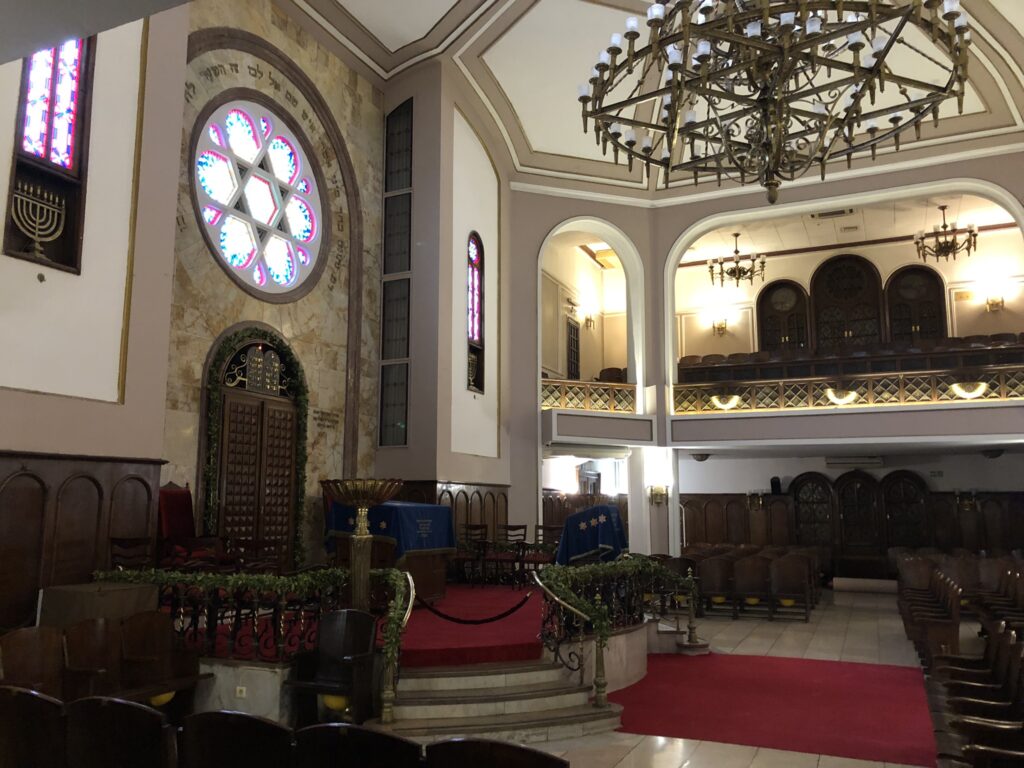
Neve Shalom Synagogue
The Neve Shalom Synagogue, octagonal in shape, has its Jewish Museum next door, within the same complex, rich in history and artifacts.
I noticed recipes we use in Turin, thanks to families of Turkish origin: for example, the masod and mustachiudos of Passover.
Among the silverware, I noticed a cup with spoons and forks very similar to models seen in Turin’s Jewish collections, but paired in the recipe book with a pure sugar dessert called Sharope (White Taffy), an Ottoman preparation similar to our pulled sweets.
I noticed a Megillah from Zaragoza, which follows a ritual similar to Purim, written in memory of the salvation of a family who emigrated to Turkey shortly before the Inquisition of 1492.
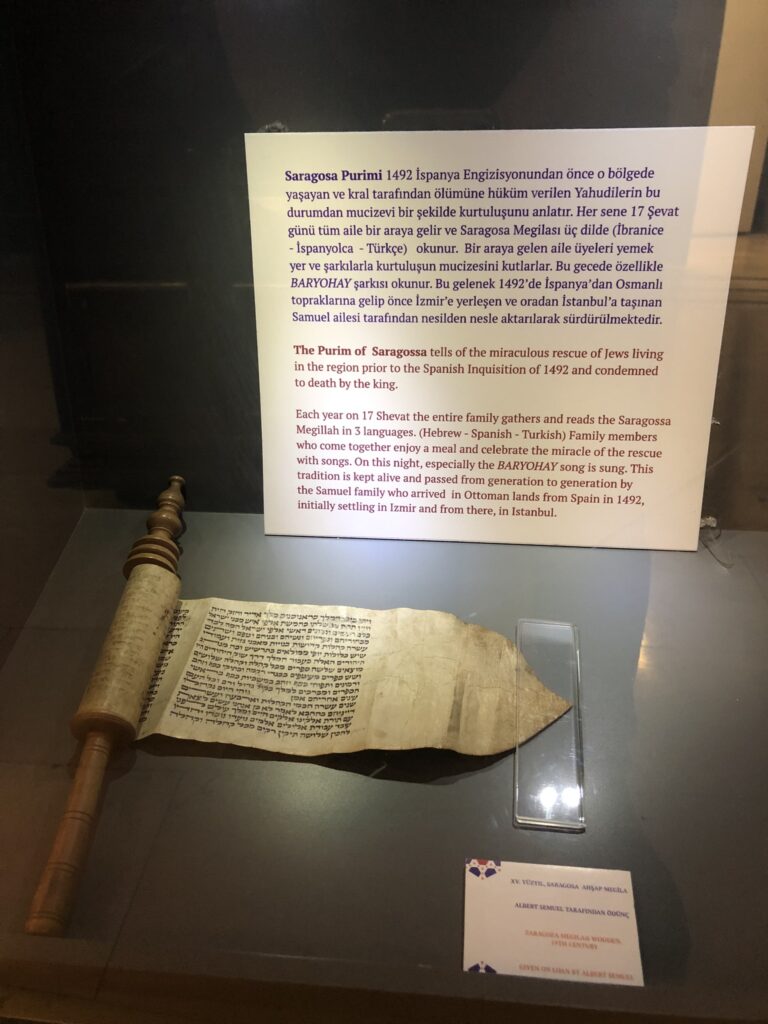
Megillah of Zaragoza
The Venetian Soncino family, who founded a Jewish printing press in Istanbul in 1530, is also remembered.
The museum explains that, after the 1923 Lausanne Convention, which guaranteed rights to minorities, the Jews of Atatürk’s secular state requested and obtained exemption from military service, feeling an integral part of the state, where historically several Jews have served as parliamentarians.
The ancient synagogues of the Balat district, Istanbul
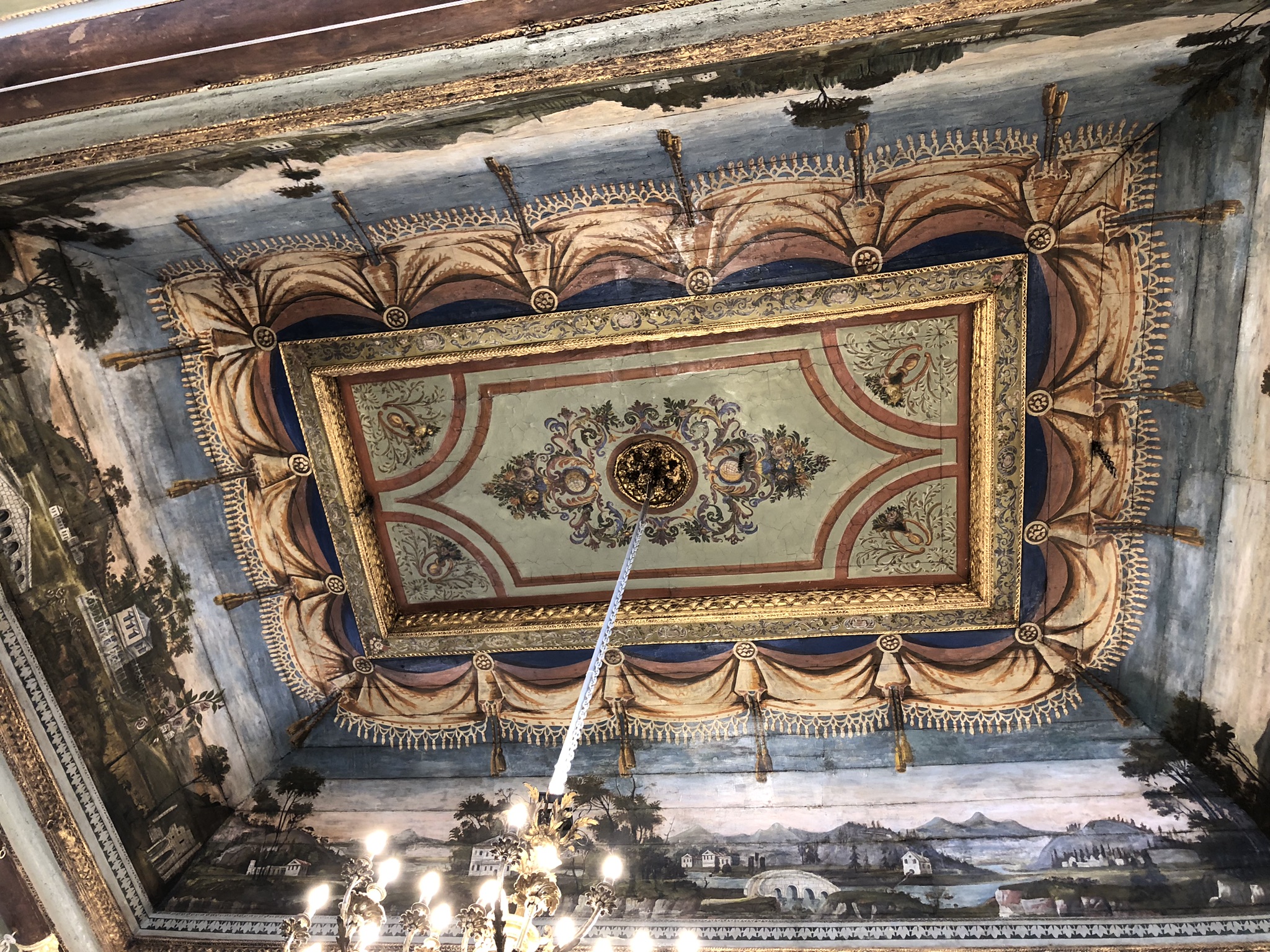
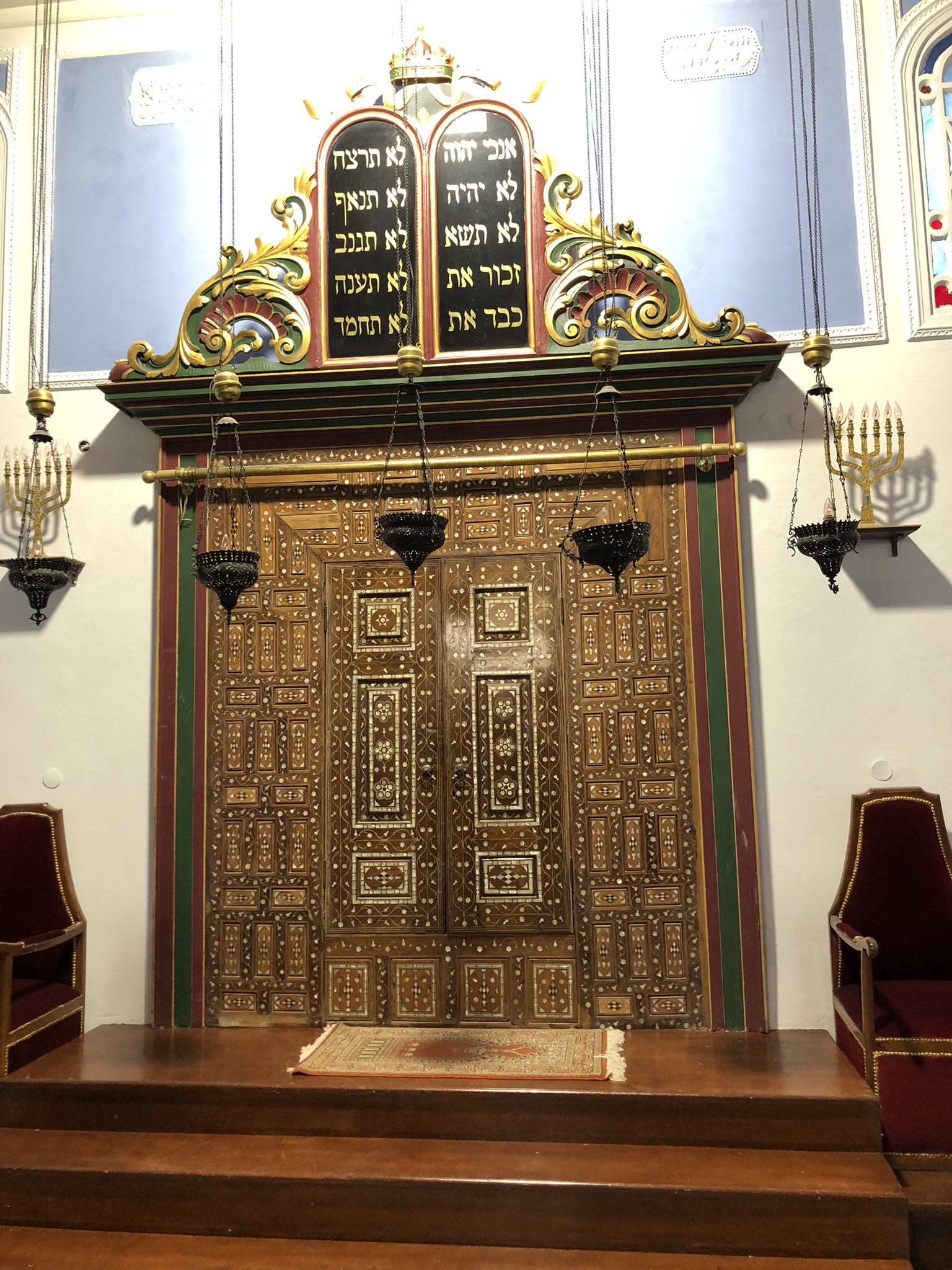
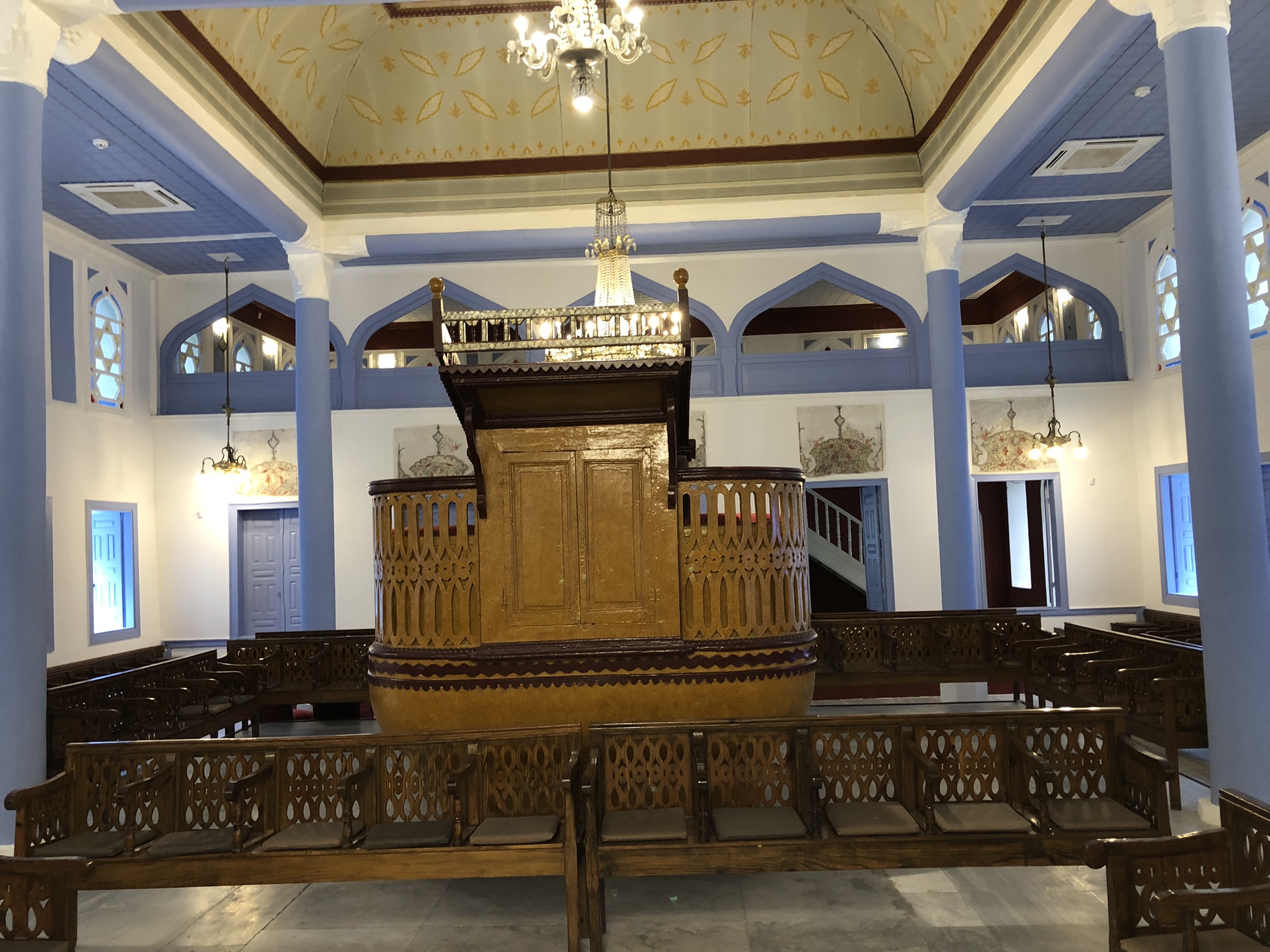
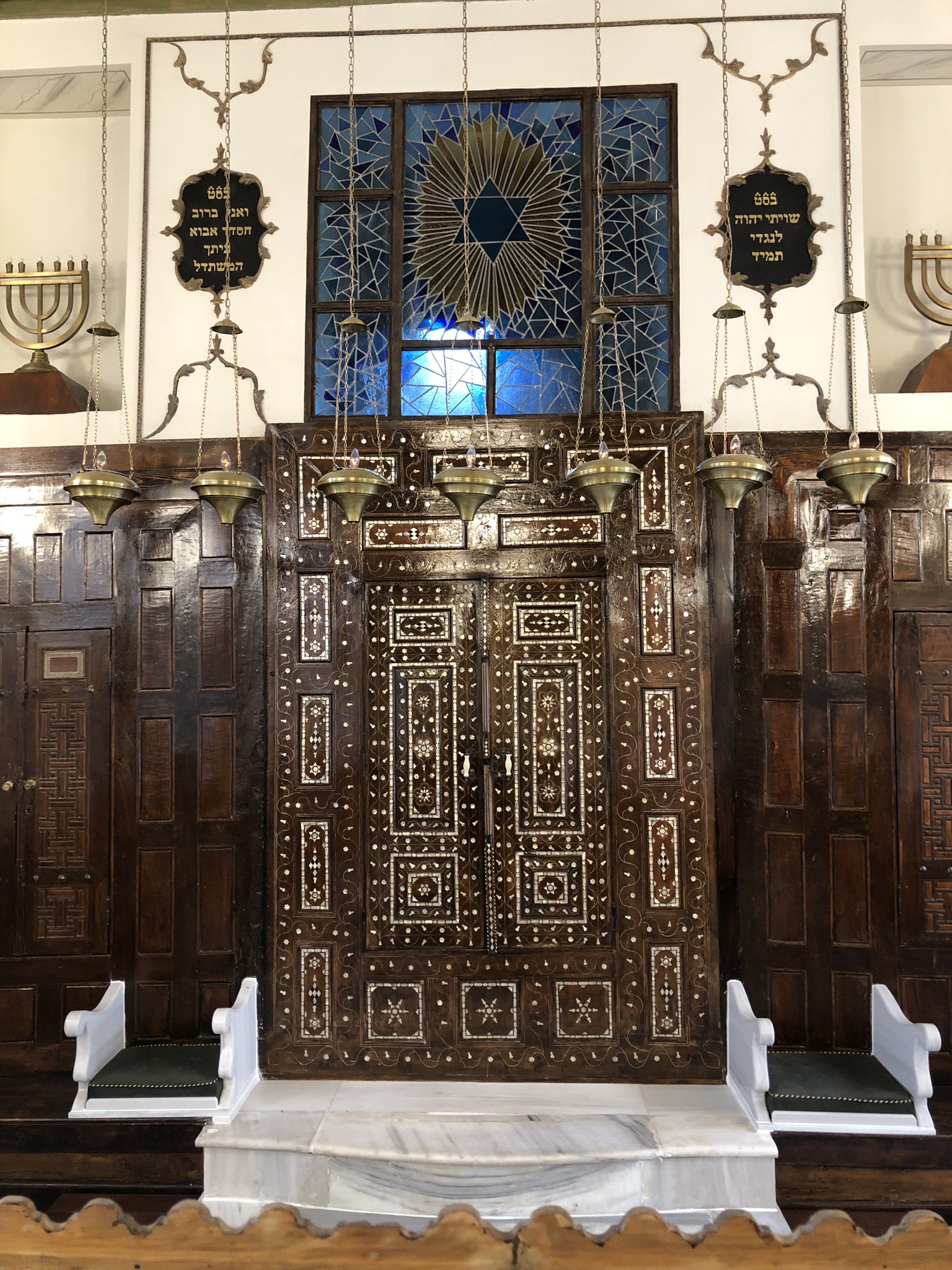
The Balat Yanbol Synagogue, built by the Jewish community from Macedonia, has a rectangular dome painted with landscapes of their homeland, a highly unusual feature for a synagogue.
Both Ahrida and Balat Yanbol Synagogues now have Aron ha-Kodesh, recently donated by the Municipality of Istanbul. These were originally beautiful Ottoman-made wooden cabinets, likely mahogany, inlaid with mother-of-pearl, and originally from Topkapı Palace. These elegant pieces are perfectly suited to such ancient synagogues.
…and in the Topkapi Palace
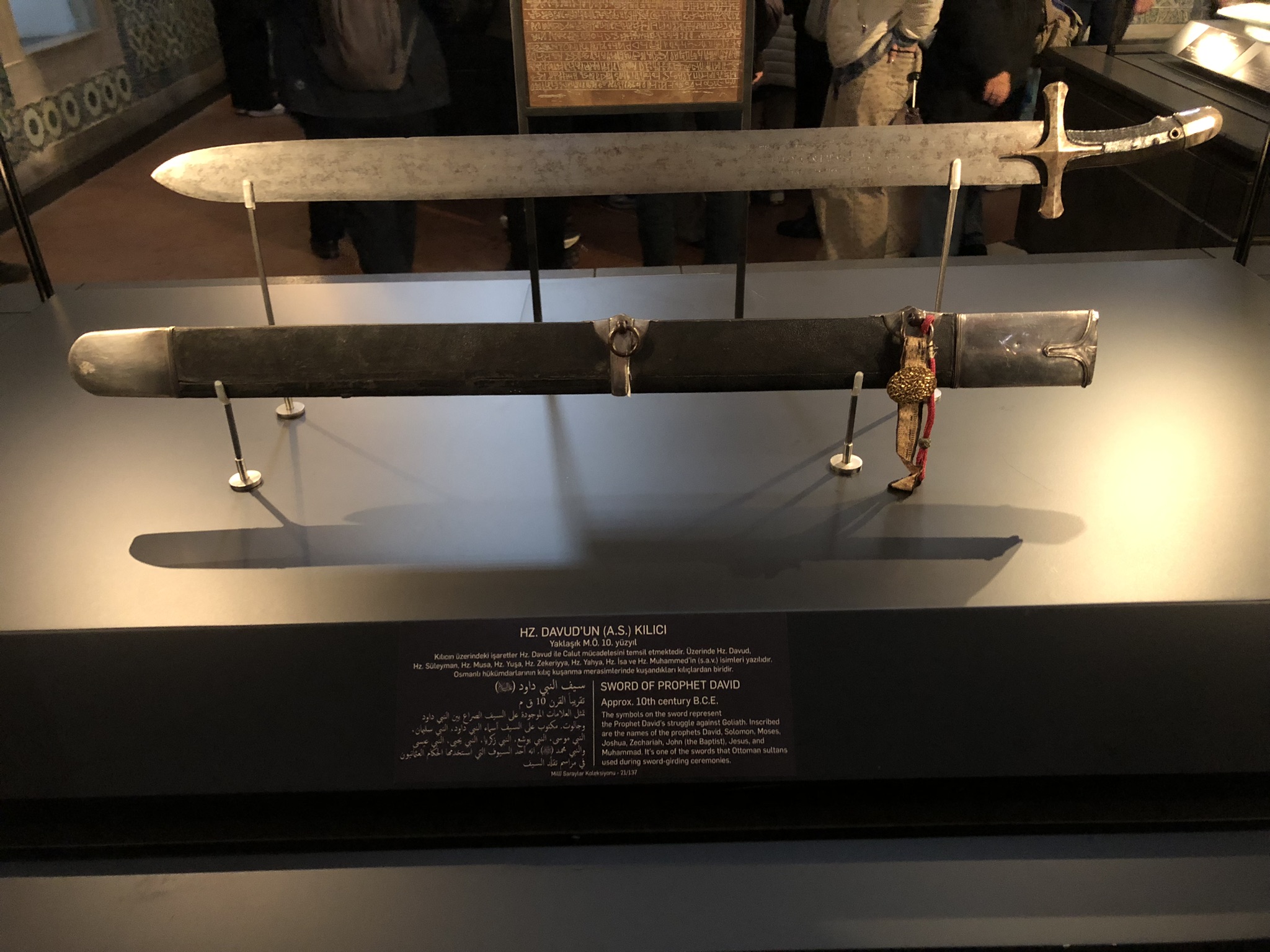
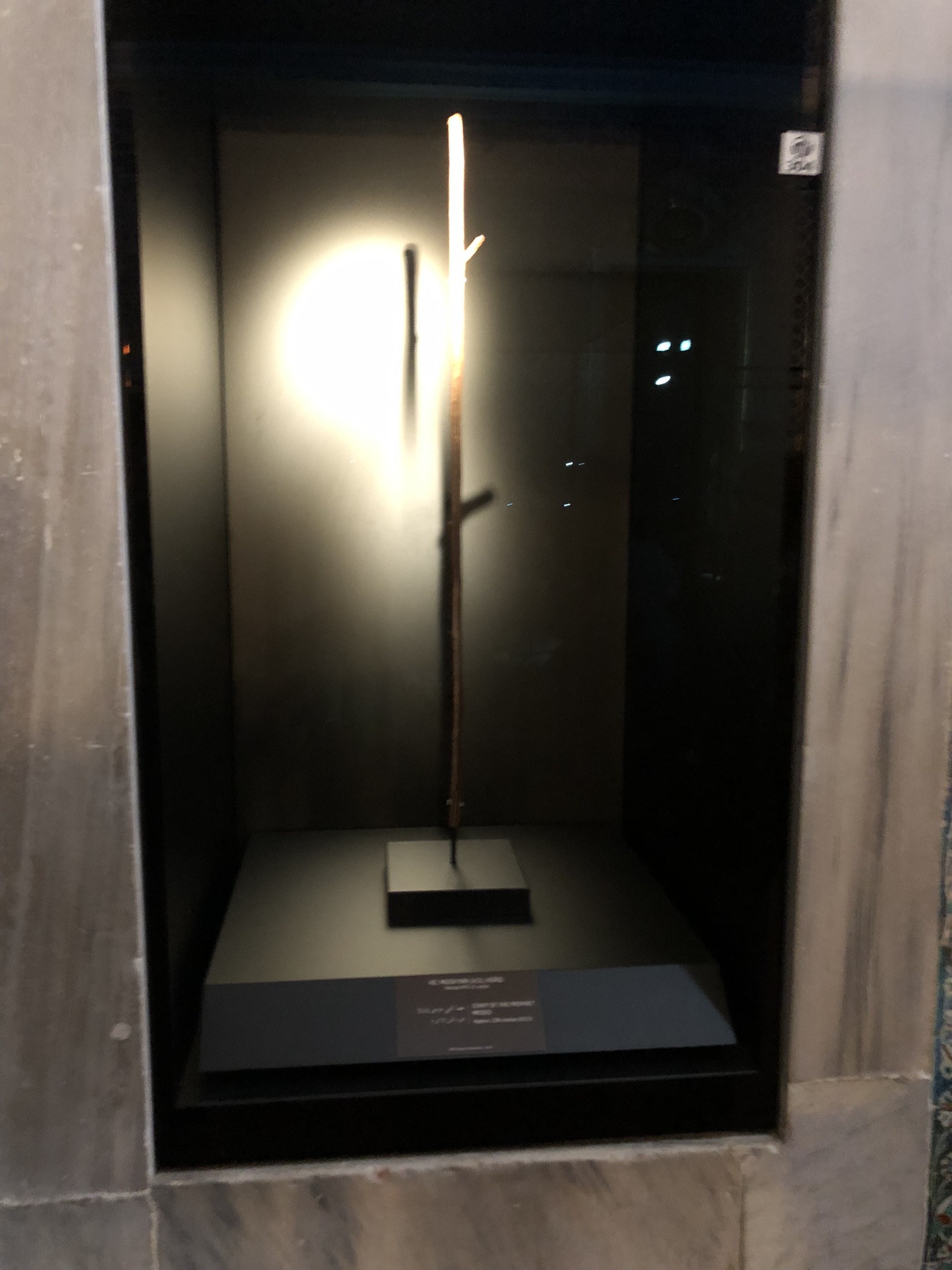
At the Topkapı Palace Museum they exhibit “Moses’ staff” and the so-called “10th-century BCE sword of King David,” which, upon first glance, is clearly a medieval weapon, completely incompatible with the 10th century BCE. It doesn’t look remotely like iron of the era. But if that’s their story, fine. In a museum so rich in authentic artifacts, it’s quite out of place.
The Ankara Synagogue
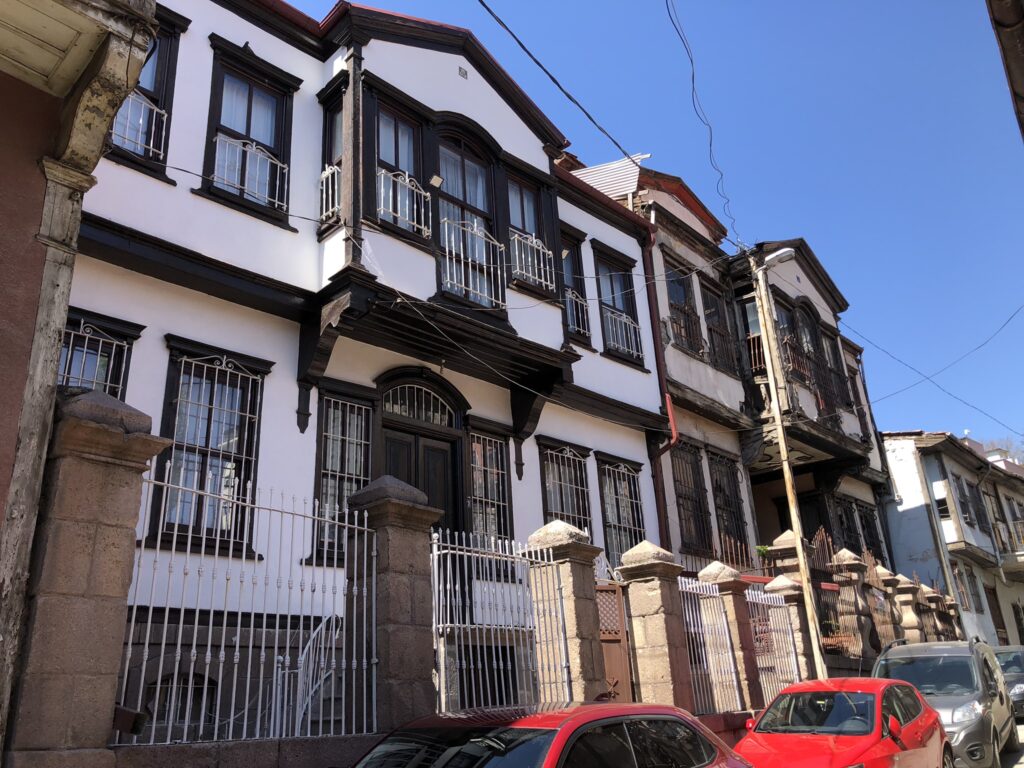
Ankara Musevi Sinagogu
In Ankara, however, the synagogue—though restored—remains in the Jewish Quarter almost completely in ruins, with surrounding buildings already collapsed or on the verge of collapse. Ankara can no longer maintain a permanent minyan or hold religious services; when needed (funerals), people from Istanbul travel there.
There are Jewish tombstones around the Roman Baths of Caracalla in Ankara, but they date back to the Ottoman era, between the 18th and 19th centuries, in the old central area of Ankara.
Daniel Fantoni

