19:04
19:04 20:11
20:11 SUKKOT, primo giorno - Lev. 22-26/23-44, Num. 29-12/29-16


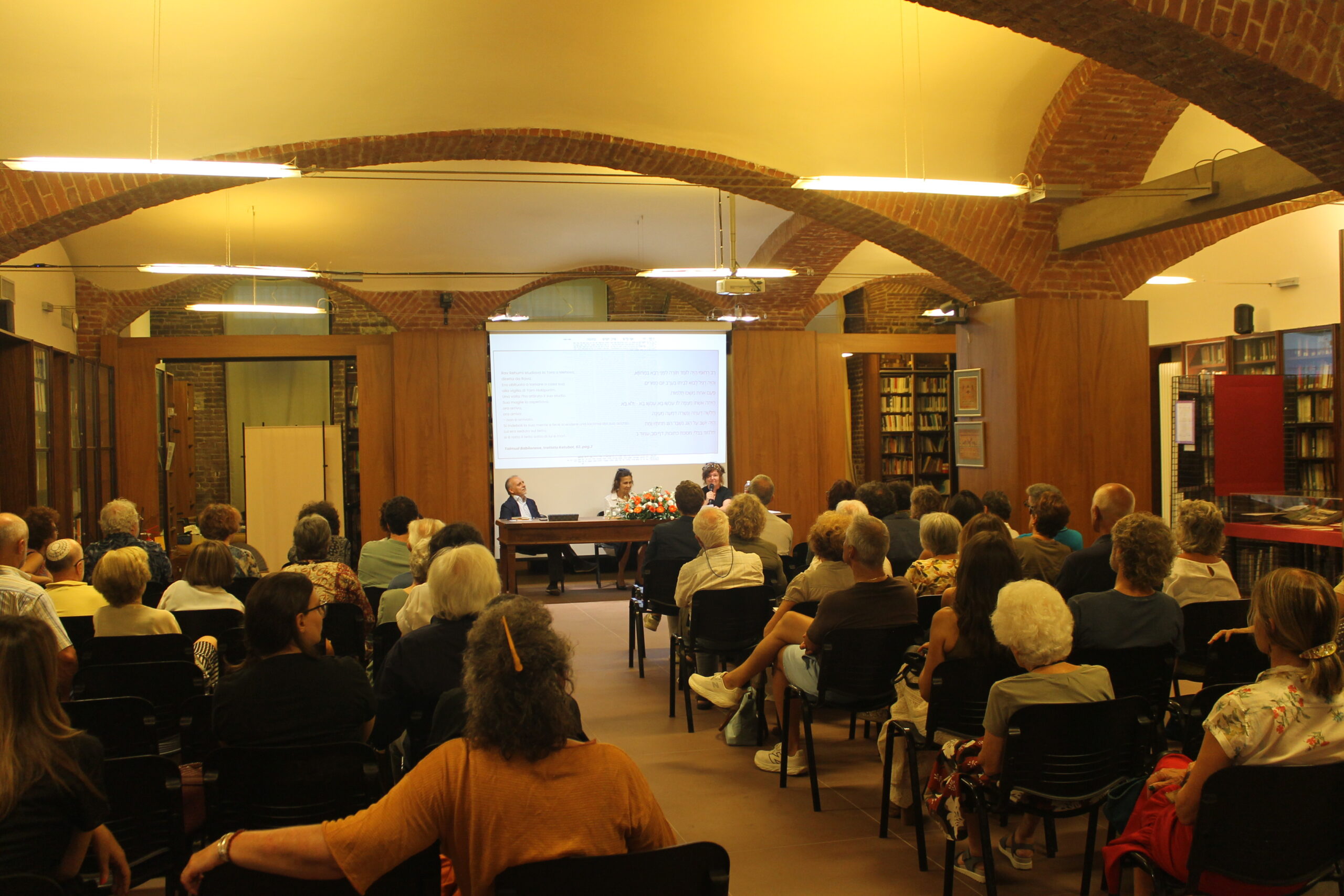
Around 260 visitors to the synagogues in Turin, 51 to the one in Asti, 43 in Alessandria, 56 in Carmagnola, 73 in Cuneo, 24 in Saluzzo, and 93 in Mondovì—six hundred guests for a Community that recently celebrated its first six hundred years of existence; to this figure, we must add those who chose to visit the ghettos of Chieri, Ivrea, and Turin, as well as the Jewish cemeteries in Chieri and Ivrea. By Anna Segre.
A more than satisfactory turnout for such an early date, with heat that was still very much summery.
The event was opened by the President of the Community, Dario Disegni, followed—as is customary—by greetings from authorities and representatives of other religions.
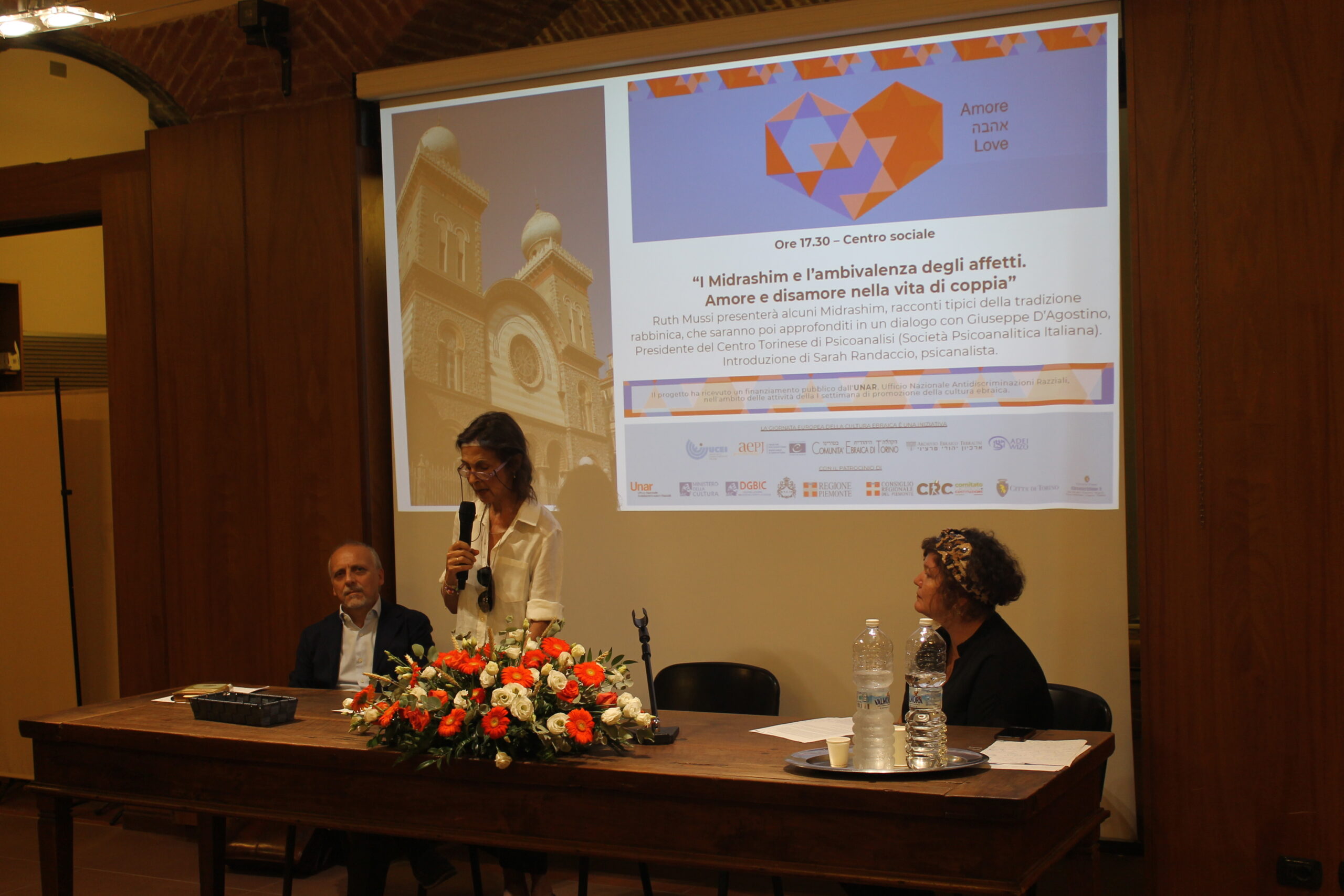
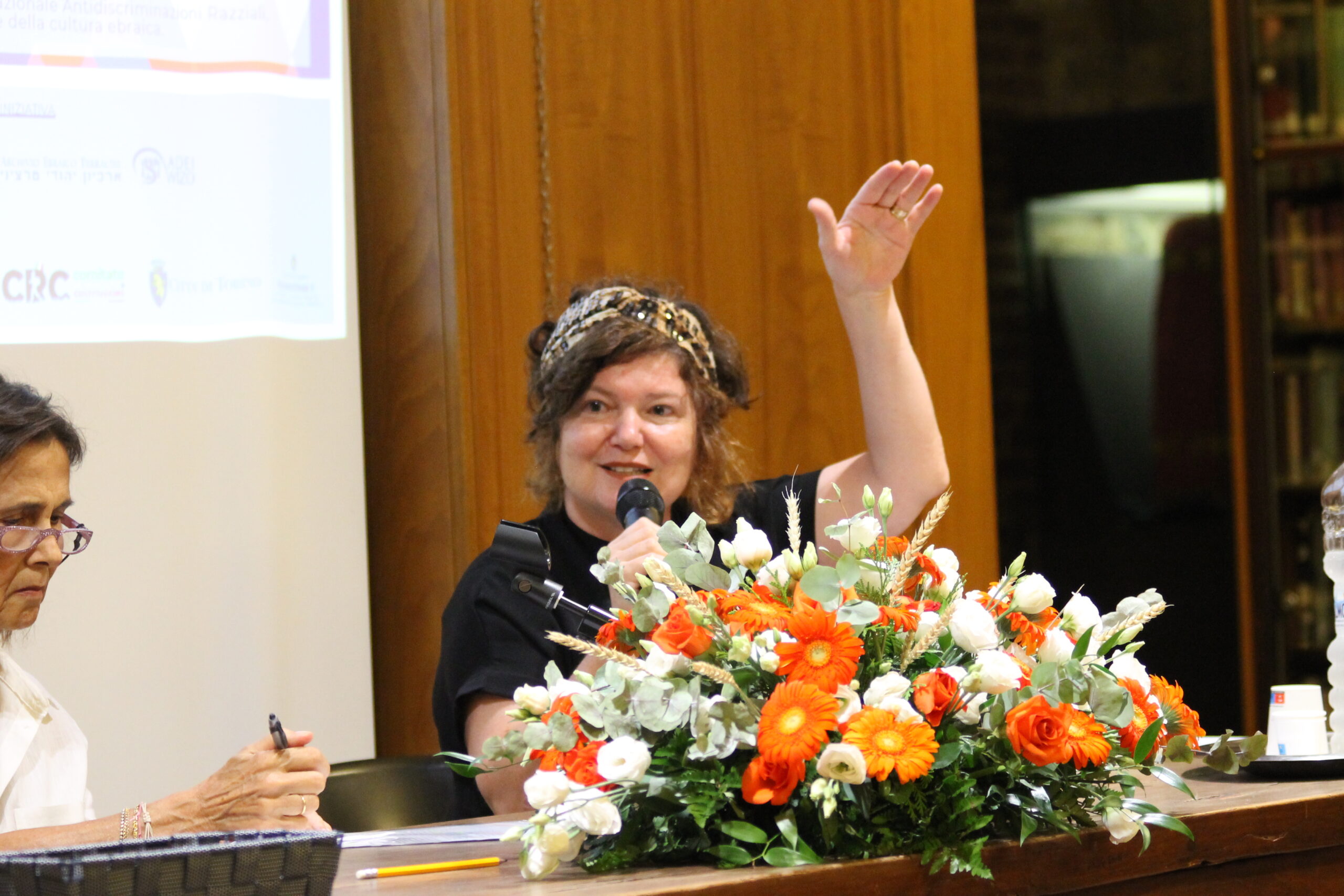
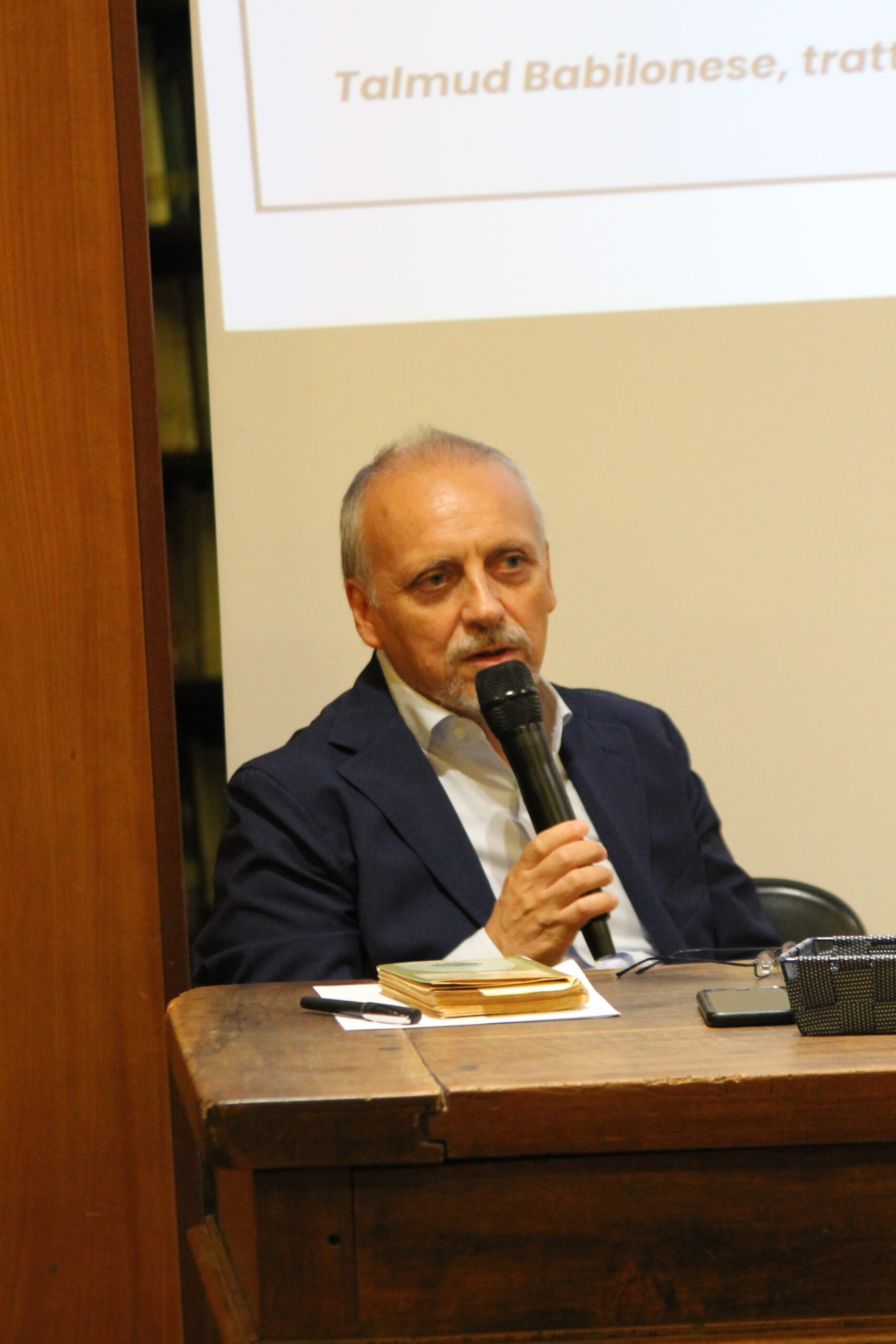
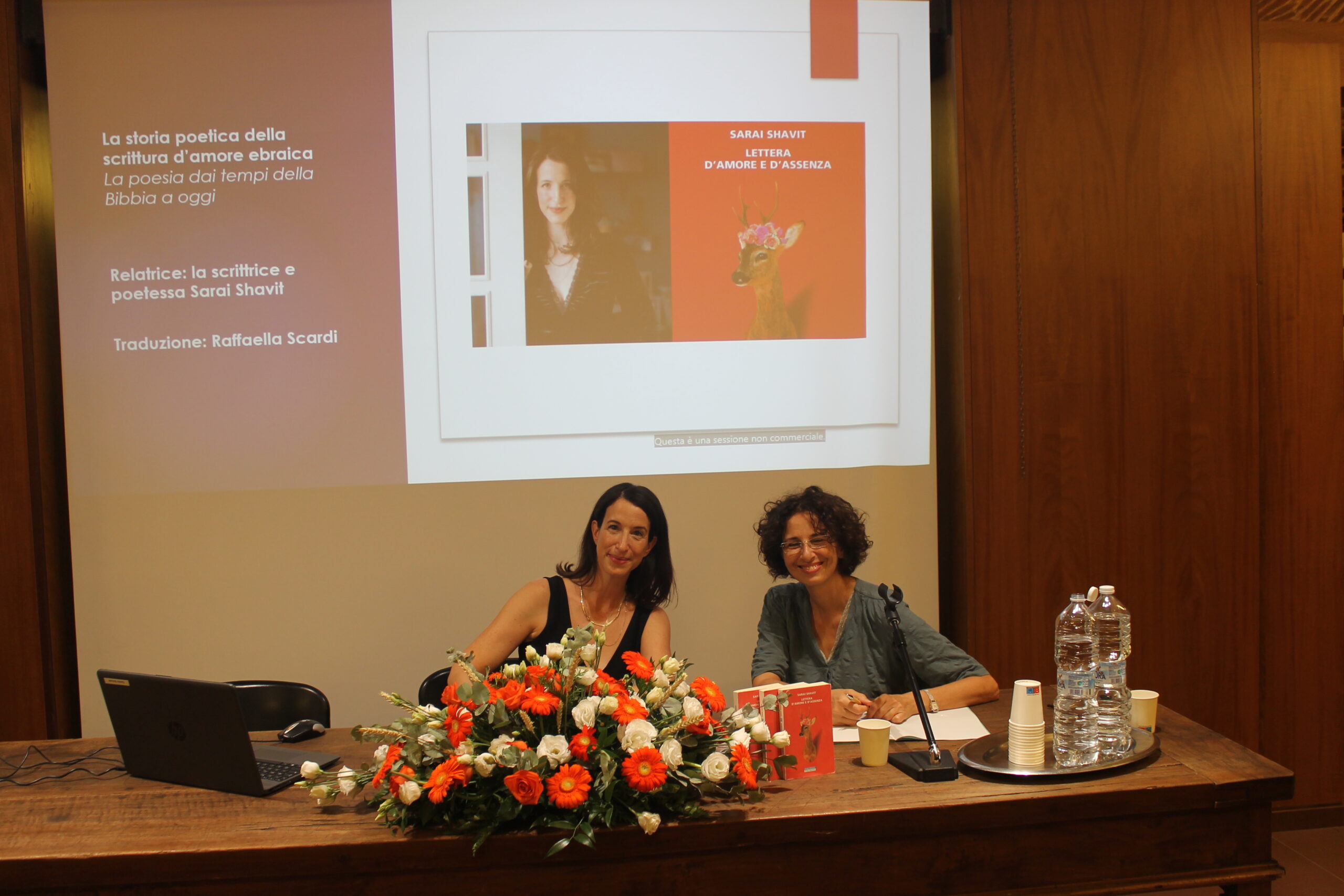
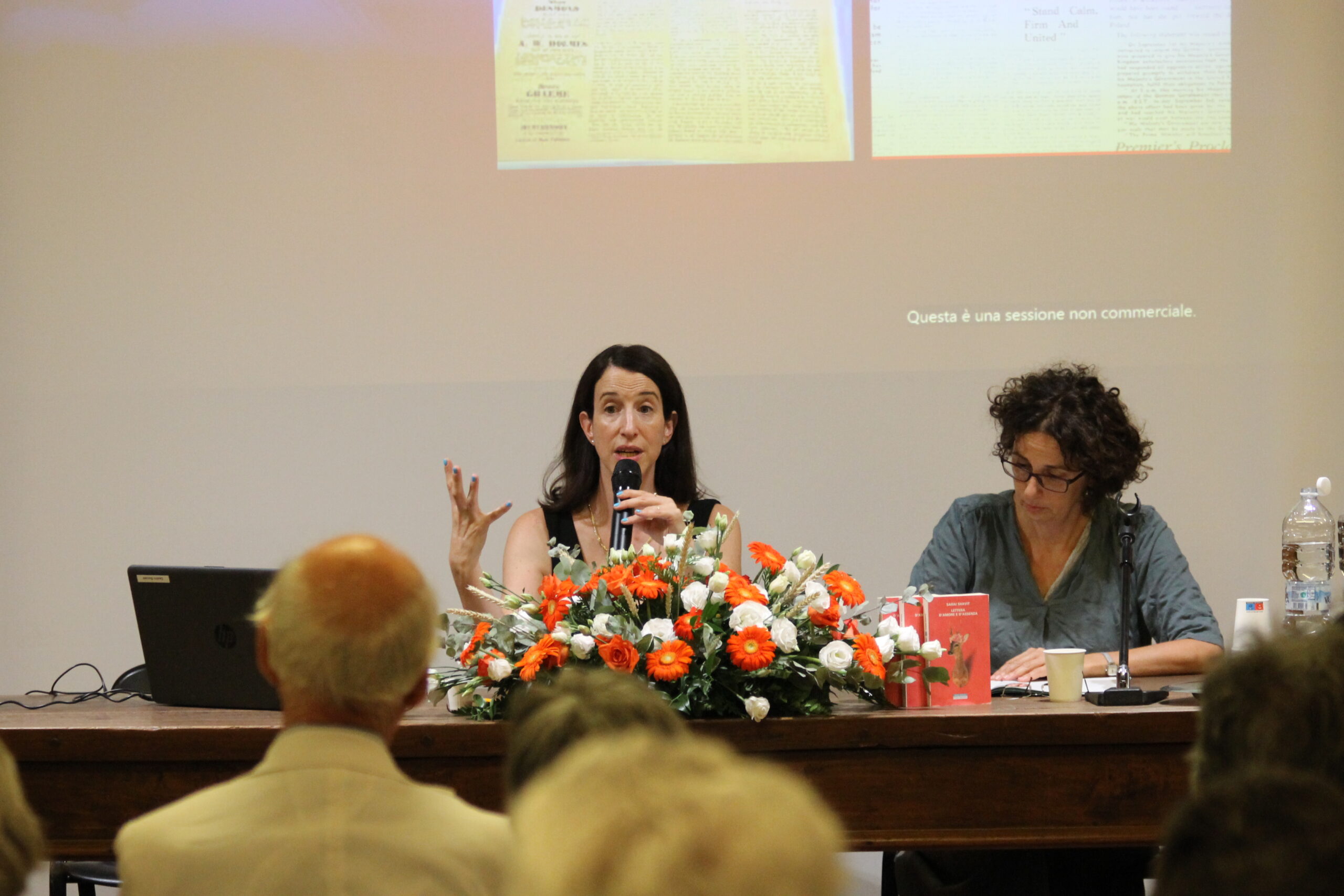
The day’s two events were also highly interesting and well-received: in the morning, a lecture by writer and poet Sarai Shavit—masterfully translated by Raffaella Scardi (interpreter, Hebrew teacher, and translator)—titled “The Poetic History of Jewish Love Writing: Poetry from Biblical Times to the Present”; and in the afternoon, a session titled “Midrashim and the Ambivalence of Affection: Love and Disaffection in Couple Relationships,” a dialogue between Ruth Mussi (teacher and collaborator with the Rabbinical Office) and Giuseppe D’Agostino (President of the Turin Psychoanalytic Center of the Italian Psychoanalytic Society), moderated by Sarah Randaccio (psychoanalyst and former Council member of our Community).
Sarai Shavit: love poetry in Hebrew
Writer and poet Sarai Shavit discussed three key periods and milieus in which Hebrew poetry flourished in the Land of Israel: the “Yachdav” group, founded in 1939, which published the journal *Turim*; the “L’Krat” group, active from 1973 to 1982; and the poetry produced after October 7, 2023. In all three instances, the poetry emerged during times of war and suffering—situations in the face of which writers felt, and continue to feel, an ethical and political responsibility. She focused specifically on two poets representing the first and second periods, respectively: Leah Goldberg (1911–1970) and Yehuda Amichai (1924–2000). Both made choices that initially provoked harsh criticism—as often happens to great figures who are ahead of their time. Goldberg was criticized for choosing to write about love during wartime; she countered that even in war, a poet must not forget life’s true values—indeed, in times that strip away humanity, the writer has a pressing duty to remind people of their humanity and the fact that loving is permissible. Yehuda Amichai (who later stated that he would not have become a poet without the war) came relatively late to writing love poetry addressed to a woman; Shavit highlighted the revolution he brought to the language of Hebrew love poetry by choosing to depict the beloved in the context of everyday life. As an example, Shavit cited an opening line that was extraordinary—and undoubtedly startling—for its era: “I see you opening the refrigerator, illuminated from within by a light coming from another world.” Leah Goldberg and Yehuda Amichai share a common thread in their constant references to the Bible—a text well known to both—and specifically to the quintessential book of love, the Song of Songs. Yet, engaging with the Tanakh is an inevitable aspect of writing in Hebrew, whether the author is consciously aware of it or not; to illustrate this point, Shavit concluded her talk by recounting an amusing personal anecdote: during a presentation in Italy of her book “Lettera d’amore e d’assenza” (Neri Pozza), a member of the audience pointed out the numerous biblical citations contained in the text.
Ruth Mussi and Giuseppe D’Agostino: dialogue between midrash and psychoanalysis
The afternoon’s discussion regarding certain Talmudic texts on marital relations was truly fascinating. After introducing the decidedly unromantic way these topics are addressed in rabbinic literature—a stark contrast to the style of the Song of Songs—Ruth Mussi focused specifically on a *midrash* about a rabbi who leaves his wife to study Torah. He once forgets to return home on the one day of the year he usually did—Yom Kippur—with tragic consequences: his wife’s tear causes the roof where he is standing to collapse. Or perhaps it was merely a dream through which the wife successfully processed her anger? Does the collapsing roof represent the husband’s narcissism? Or could it be a case of psychosis? The three psychoanalytic interpretations of the *midrash* proposed by Giuseppe D’Agostino reveal the rich potential found at the intersection of *midrash* and a discipline that—perhaps not coincidentally—originated with a Jewish thinker. Incidentally, speaking of egos that need to be kept in check, D’Agostino cited the Tower of Babel and the architectural project by Antonelli—a design that, to the Turin Jewish community of the time, seemed almost to mimic that tower. It was a project of truly excessive ambition for a synagogue, yet it would go on to become the symbol of our city: the Mole Antonelliana.
Since this time it is not just a day but an entire week of culture, we remember the next two events: tonight, 8 September, at 9pm at the Social Center the show-concert “A Dybbuk for our times” on the theme of “Dybbuk” and on the legendary and fascinating figure of Shloyme An-Sky, by and with Miriam Camerini (voice), Angelo Baselli (clarinet) and Gianluca Casadei (accordion).
Tomorrow, 9 September, at 5pm at the National University Library of Turin (piazza Carlo Alberto 3) the literary-musical round table dedicated again to Yehuda Amichai
Anna Segre