16:33
 17:41
 Wayshlach - Gen. 32-4/36-43



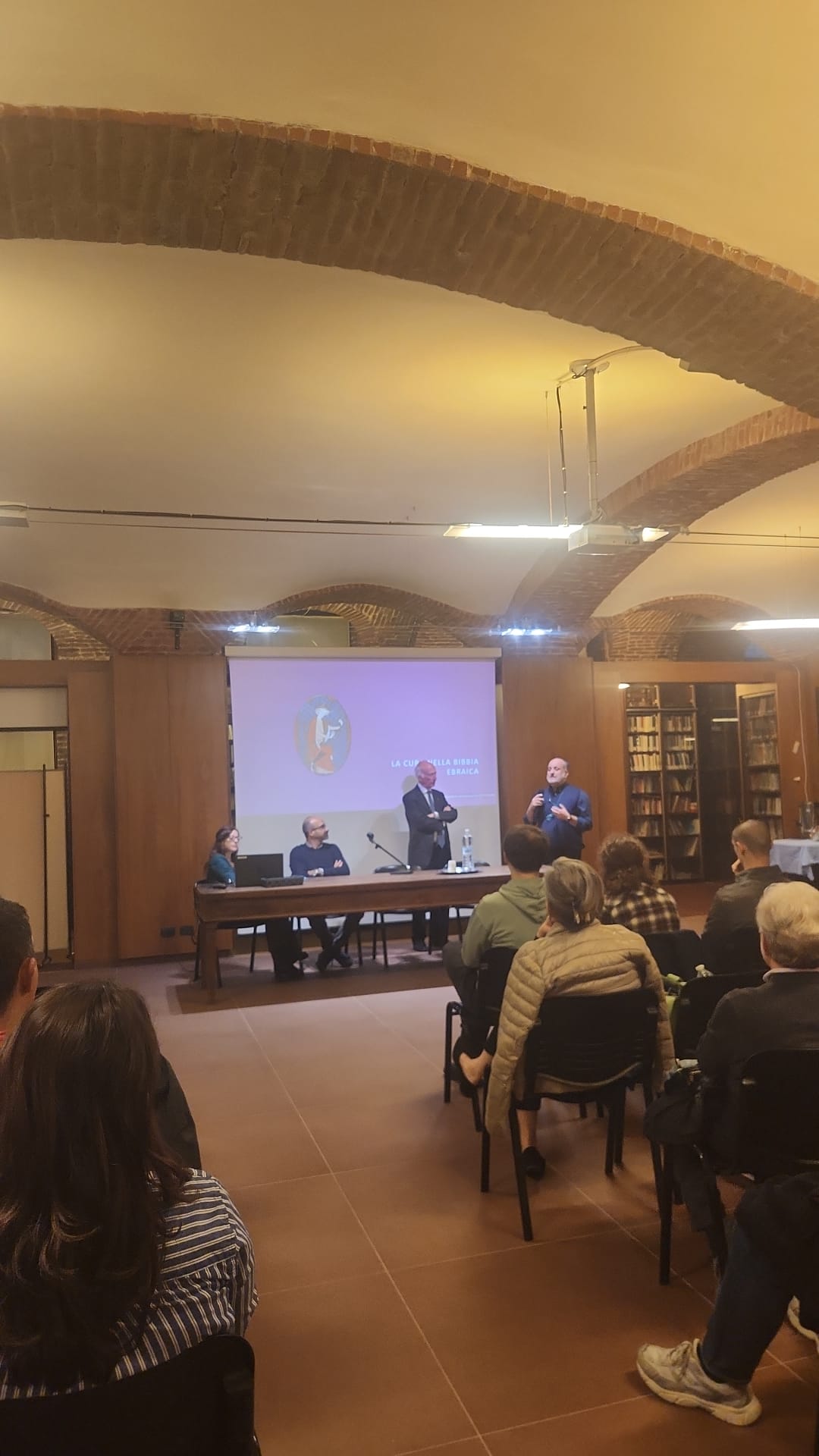
On October 21, an engaging meeting took place at the Jewish Community of Turin, dedicated to the theme of care and healing in the Bible and the Quran—an opportunity for in-depth exploration and dialogue across religious traditions, sacred texts, cultures, and tastes.
The initiative, organised by the Department of Humanistic Studies in collaboration with the Jewish Community of Turin and Dar al Hikma, received the patronage of the Interfaith Coordination of Piedmont and took place within the framework of Sharplab (Shared Religious Places), the interuniversity center that brings together the University of Turin, the Polytechnic University of Turin, Sapienza University of Rome, and Roma Tre University.
The meeting represented the second part of the Third Mission project, “The Jewish Book as a Documentary Source and Material Object,” conceived and promoted by Professor Chiara Pilocane and supported by the Department of Humanities. The first part of the project took place between September and October, featuring a conference and an exhibition at the State Archives.
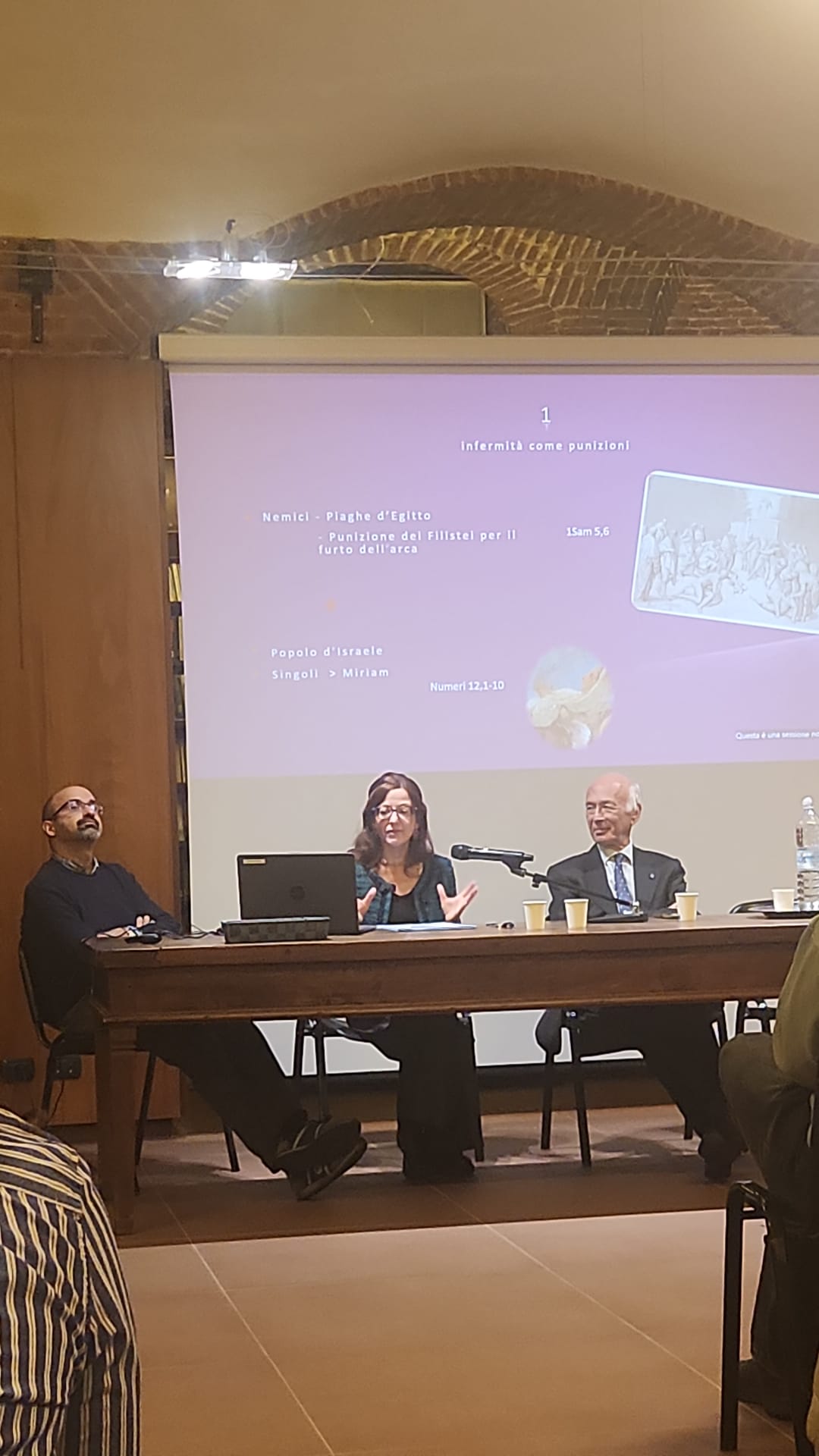
The meeting opened with warm remarks from Dario Disegni, President of the Jewish Community, who underscored the importance of intercultural encounters rooted in sacred texts; he was followed by Alessandro Mengozzi, Director of the Department of Humanities. Subsequently, Professor Chiara Pilocane, who teaches Hebrew Language and Literature, and Professor Francesco Grande, who teaches Arabic Language and Literature, took the floor, offering two rich and complementary explorations of the sacred texts of Judaism and Islam.
Professor Chiara Pilocane explored the biblical concept of God as the sole healer, as well as the role of prayer—understood as a tool for healing, though not as a guarantee of an automatic outcome. This perspective helps explain why the Bible contains relatively few detailed descriptions of therapeutic practices. The presentation also addressed the notion of illness as a form of punishment—a concept found even in legal texts—as well as the challenges involved in interpreting and translating biblical terms that refer to infirmities, diseases, and symptoms.
Through numerous examples drawn from the Scriptures, the study also examined objects and figures associated with healing—such as the bronze serpent and the prophets Elijah and Elisha. Particular attention was given to accounts of resurrection, which are considered the ultimate expression of healing as they manifest divine power, as well as to the mediating figures through whom healing can be brought about.
Professor Francesco Grande explored references to medicine and healing across various surahs of the Quran, highlighting how numerous passages dedicated to these themes appear in the Meccan surahs—some of the oldest parts of the text. His presentation also shed light on the linguistic nuances of the various Arabic verbs commonly translated into Italian as “to heal” or “to treat” (*curare*), demonstrating how such linguistic choices are essential for grasping the meaning of the texts. Furthermore, the discussion examined the different forms of healing found in the Quran: spiritual healing, physical healing, healing linked to the encouragement of specific behaviors, and healing of a magical nature.
The comparison between the two presentations offered the audience an opportunity to reflect on the different ways in which the Jewish and Islamic traditions approach the relationship between illness, healing, prayer, and divine intervention, highlighting both the specific characteristics of each tradition and certain shared themes.
On a personal note: It was very interesting to note how some ancient Jewish practices are still in use in some Israeli communities: mandrake roots, Dudaim, an ancient plant described in the Bible as an aid to fertility (Genesis 30), is still used in cases of infertility. A reference to the miraculous healing of Miriam—sister of Moses—following her affliction with leprosy, is found in the recitation of the shortest prayer in the Bible: a brother’s prayer for his sister, “El na refa na la” [O God, please heal her], God please heal for her (Numbers 12). Even today, these five words are recited during times of crisis, such as in the case of a serious illness or a complex surgery.
The conference was attended by university students and interested individuals from both the Jewish community and the general public, in an atmosphere of curiosity and exchange.
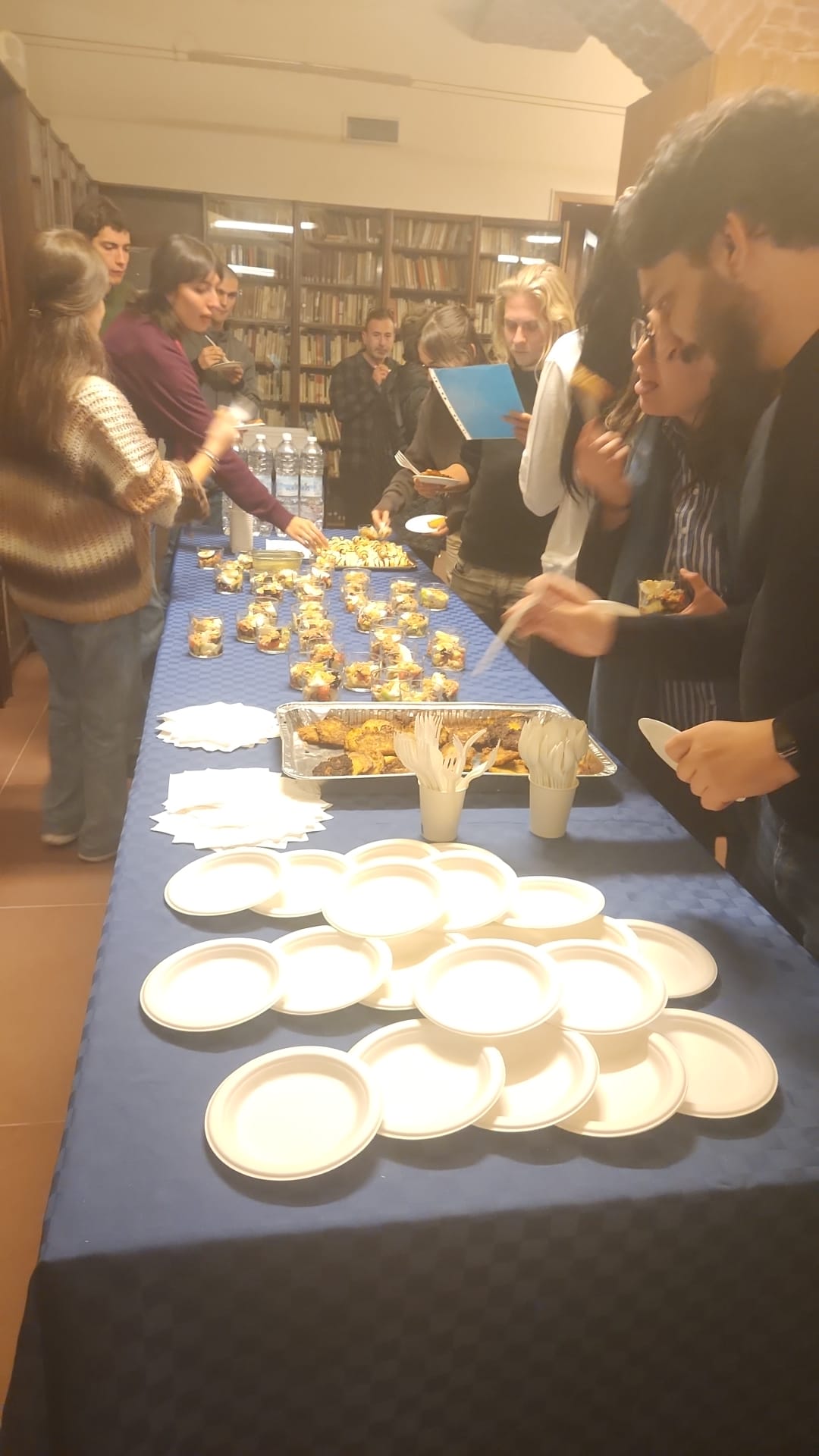
Following the meeting, the conversation continued in a relaxed, social setting, accompanied by a tasting of Jewish culinary specialties prepared by the kosher catering service Enò, located on Via Galliari.
Professor Chiara Pilocane explained the origin and cultural significance of some of the dishes served, demonstrating how cuisine, too, can tell the story of Jewish communities and their traditions.
Among the specialties tasted was “sabich,” a dish from the Iraqi Jewish tradition whose name is commonly linked to the Arabic word ṣabāḥ, “morning.” Originating as a dish to be eaten on the morning of Shabbat, it traditionally consists of hard-boiled eggs, potatoes, and fried eggplant.
Also featured are “latkes”—fritters typical of the Eastern European Jewish tradition—which are especially associated with the holiday of Hanukkah, a time when foods fried in oil symbolically evoke the miracle of the oil in the Temple.
To conclude the tasting, there were “rugelach”—small, rolled pastries shaped like little crescents, typical of the Ashkenazi Jewish tradition—prepared with various fillings, including cocoa and cinnamon.
The tasting thus added another dimension to the gathering: alongside the reflection on sacred texts, food offered a tangible and engaging way to connect with the memory, history, and richness of Jewish traditions.
The second session of the series “Judaism and Islam: Care for the Body and Soul,” titled “Medicine in the Medieval Arab and Jewish Tradition,” will take place on Wednesday, November 4, 2026, at 6:00 PM.
While the first session on October 21 was held in Piazzetta Primo Levi, this second meeting will take place at a different venue: the Dar al-Hikma Cultural Center (located at Via Fiocchetto 15, Turin).
Ruth Mussi