19:04
19:04 20:11
20:11 SUKKOT, primo giorno - Lev. 22-26/23-44, Num. 29-12/29-16


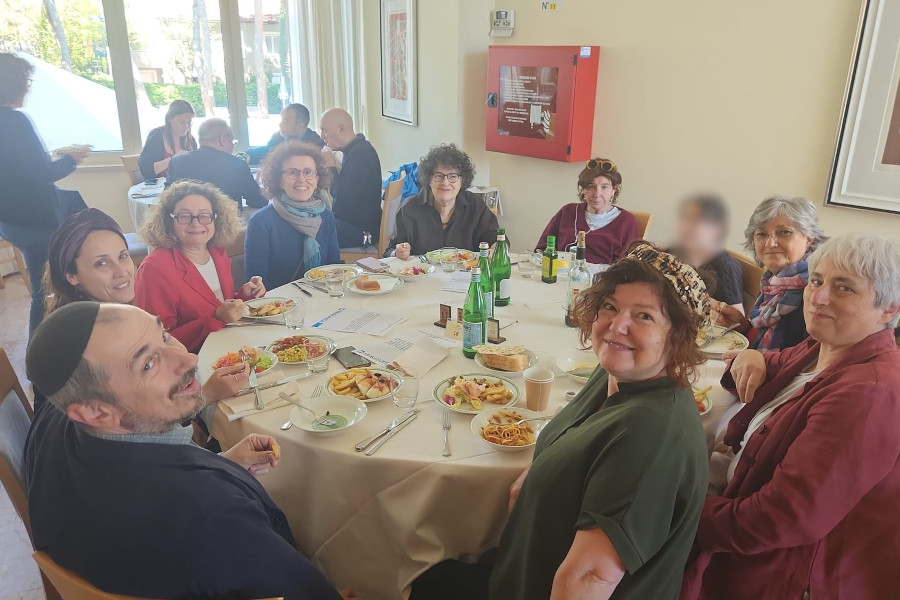
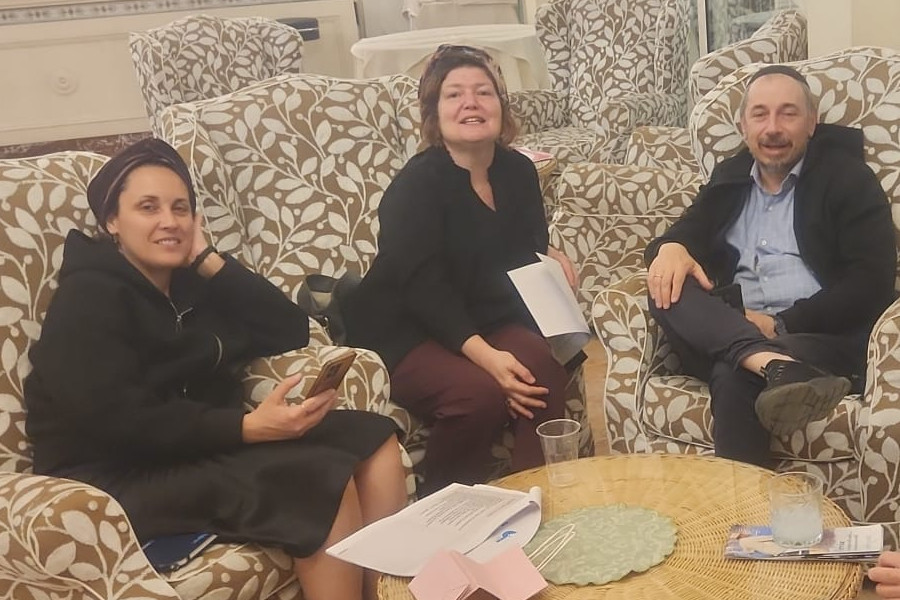
The traditional Moked, the spring cultural gathering organized by the Union of Italian Jewish Communities, took place from April 30th to May 3rd. It returned to its usual setting in Milano Marittima after last year’s Calabrian outing. This year’s theme was Torah, Love, and Fantasy. While it didn’t reach the number of participants of a few years ago, when Moked attracted several hundred people, attendance was higher than the organizers’ expectations, so much so that all available seats in the hotel were sold out. This size (around 150-200 people) has its advantages, allowing for greater interaction among participants. For us Turin residents, this more family-friendly atmosphere was complemented by the feeling of being on home soil, as many activities were led by our own Ruth Mussi and our former Chief Rabbi and Rabbanit Rav Ariel Di Porto and Elisabetta Triola.
The strength of Moked—and of Italian Judaism in general—lies in its ability to unite and foster dialogue among people with very different ideas and ways of experiencing Judaism. This was also the case this year.
The many activities were structured around three main themes: the theme of love (the same as that for the European Day of Jewish Culture, which will take place in September) explored in various forms; the current challenges for Italian Judaism, particularly its ability to communicate externally; and, during Shabbat, the week’s Parashah, Emor, which was referenced in many of the rabbis’ speeches and, most notably, the subject of an engaging lesson by Rabbi Roberto Della Rocca, held poolside on Saturday morning after tefillah and a generous and delicious kiddush. This lesson provided a good example of the importance of finding sacredness even in the concreteness of everyday life, as the Rabbi had spoken of in his analysis of the part of the parashah concerning the offering of bread in the Temple.
The theme of love was analyzed from various perspectives (psychological, philosophical, sociological), in dialogue with the sources of Jewish tradition: the Song of Songs and its allegorical interpretations (illustrated by philosopher Massimo Giuliani), the texts that refute the false accusations leveled at Judaism of being a religion in which law prevails over love (the subject of a speech by Rabbi Roberto Della Rocca), the Talmud with its often disconcerting and problematic tales of the relationships between the Masters and their wives (presented by Elisabetta Triola and Ruth Mussi, who then encouraged discussion from the audience).
Italian Judaism was discussed in two evening sessions, the first focusing on young people—with Maia Piperno, current President of the Union of Young Jews of Italy, Ioel Arturo Roccas, Vice President of the EUJS (European Union of Jewish Students), and Daniele Nahum, former President of UGEI and currently a Milan City Councilor—and the second on the UCEI, with newly elected President Livia Ottolenghi and the UCEI Councilors present, including our representative Sara Levi Sacerdotti, who briefly presented their roles in the Union and its programs, leaving time for questions from the audience.
Beautiful weather, good food, and conviviality accompanied the cultural component, and there were plenty of opportunities for physical activity. Children’s activities were also well-organized. It would be wonderful if, in the future, younger people could be more involved, and if greater participation could be encouraged with lower prices or at least discounts or assistance for families. Perhaps Jewish communities could also play a more active role in this regard.
By Anna Segre